
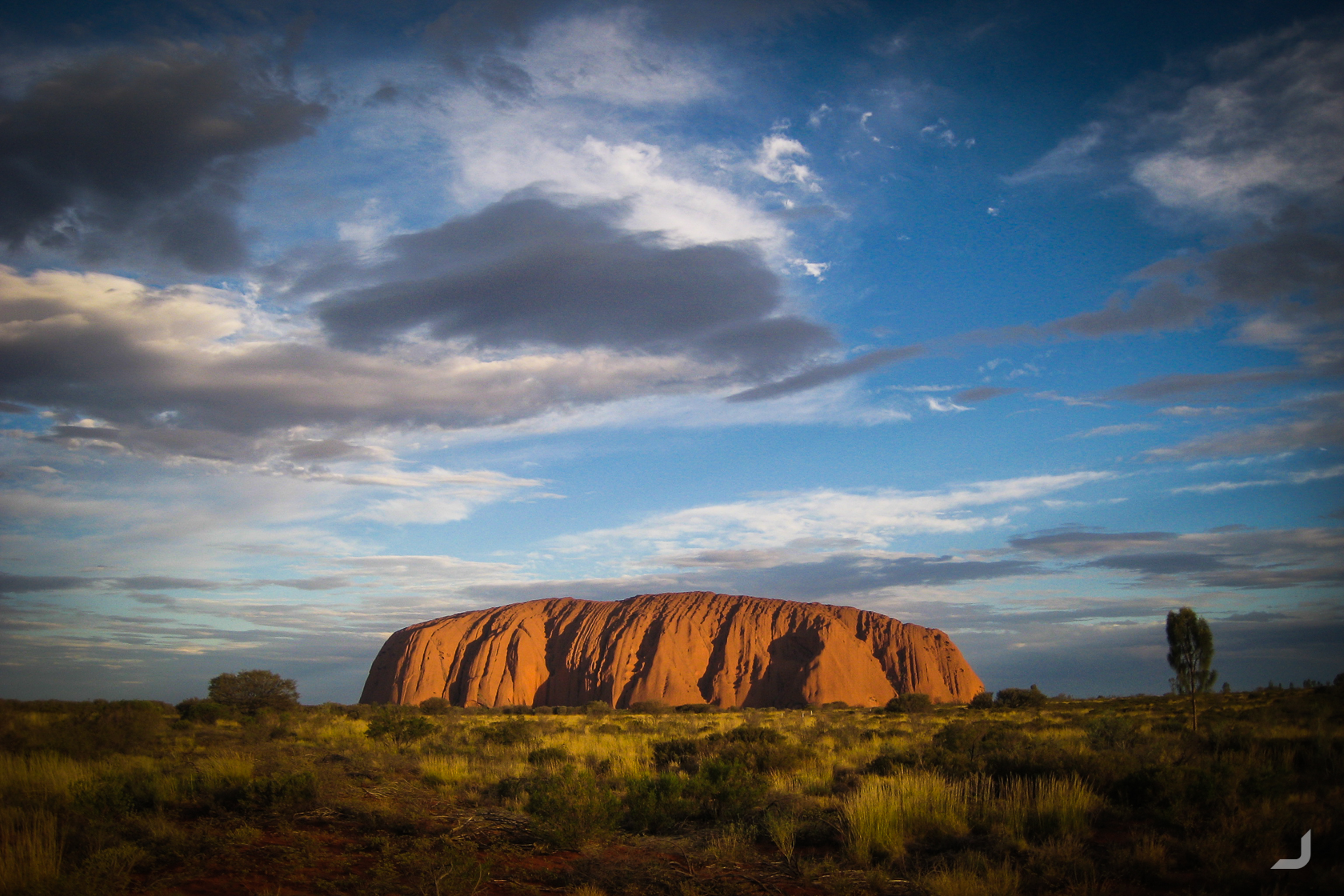
On my very first awesome adventure almost all around Australia of about 2 months of travel in my study break in 2007/08, I passed Uluru about half way. Located near the centre of the country, surrounded by a vast, flat dessert, it is one of Australia’s main icons for a reason.
I started the two three-day, two-night trip from a hostel called Annie’s Place. The tour was led by Scotty, who guided our group of about 24 backpackers through both Uluru and Kata Tjuta.
At night we slept in swags, something like a duffel bag with a foam mattress that you can climb into, in the open air underneath a blanket of millions of bright stars.
-
Uluru
Australia


Uluru was formed around 550 million years ago when layers of sand and gravel eroded from nearby mountains were deposited in an ancient sea, compressed into hard arkose sandstone, and later tilted sideways and lifted above the surface. Over time, wind and water erosion shaped the rock into the massive monolith we see today.
Scotty further explained how the indigenous aboriginals had lived in the area for thousands of years and regarded Uluru as a very sacred place. Up close I could see why, an inexplicable energy could be felt. Equally intriguing was a book in a nearby museum with letters from ex-visitors who had sent stolen rocks back because they believed they had caused too much bad luck in their lives.
King's Canyon
King’s Canyon is a sandstone gorge not far from Uluru, with towering cliffs, ancient cycads, and unique rock formations. It was carved over millions of years by water erosion and is a sacred site for the Luritja people.


King’s Canyon in Australia.
Kata Tjuta
Kata Tjuta, also known as the Olgas, is a group of 36 massive domed rock formations made of conglomerate rock, located about 25 km west of Uluru. They hold great cultural significance for the Anangu people and similar to Uluru, they were shaped over millions of years by erosion and geological uplift.

Kata Tjuta in Australia.