
In November 2019, I booked a trip to Japan for my mum and me to celebrate my birthday. Then the world changed, and the flight was canceled.
Four years later, the chance to try again finally came – this time, at the end of a five-month journey spanning the USA, Morocco, the Mediterranean, The Netherlands, and Indonesia. Though Japan was a brief stop by comparison, it was every bit as impressive.
Tokyo
With a population of approximately 37 million, Tokyo is the world’s largest city. The city contains a unique blend of traditional with modern and there is no other city quite like it.

The mirrors in a Jingumae mall reflect the constant flow of people moving through Tokyo.


Diverging roads at Hakozaki Junction in Tokyo.


The Shibuya crossing is the busiest crossing in the world with as many as 3,000 people crossing at a time.

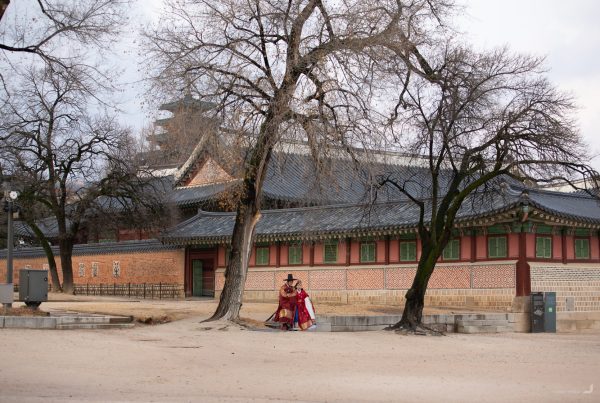
Women in kimonos in Nishiasakusa are a common sight. Initially thinking it marked a special occasion, we later learned from a café staff member that many women commonly dress in traditional attire for no particular reason.
teamLab Borderless
teamLab Borderless is a museum featuring advanced immersive art installations that combine light, mirrors, and sound. Booking in advance is recommended.


Images from inside teamLab Borderless in Tokyo.
Kyoto
Kyoto, once the imperial capital of Japan, is known for its cultural heritage and beautiful landscapes. It is home to numerous UNESCO World Heritage Sites, including historic temples like Kinkaku-ji (the Golden Pavilion) and Ryoan-ji, as well as the Fushimi Inari Shrine with its thousands of torii gates.
Hōkan-ji Temple in Kyoto features a five-story wooden pagoda, the last remnant of a 6th-century temple complex. Known as a tasōtō, such pagodas traditionally have an odd number of stories.

Katsura River and Arashiyama Monkey Park Iwatayama
West of Kyoto, the Katsura River and Arashiyama Monkey Park lie beyond the Togetsukyō Bridge. A climb up the hills offers panoramic city views and a chance to observe Japanese macaques, who – as they should – couldn’t care less.


A boat on the Katsura River from above (top) and Japanese macaque monkeys in Arashiyama Monkey Park (bottom).
Arashiyama Bamboo Forest
The Arashiyama Bamboo Forest is a natural bamboo forest in Kyoto. Despite taking the earliest train possible to avoid the crowds, there were already many visitors upon my arrival at 6.30am, with queues at key viewpoints. Along the path, monks could be seen tidying the area.
-
Arashiyama Bamboo Forest
Japan


The Arashiyama Bamboo Forest in Kyoto. For the scenic viewpoints, there was a queue, even at 6.30am.
Fushimi Inari Shrine
Thousands of torii gates line the paths of Mount Inari, symbolising the transition from the mundane to the sacred.


A Japanese woman poses underneath the torii gates in Inari (top and bottom left). There are thousands of torii gates on the Inari mountain and it takes about 2 hours to walk to the top of the mountain.

Water flowing onto my hand near the Fushimi Inari shrines, placed upside down.
Lake Kawaguchi
Lake Kawaguchi is one of the five lakes surrounding mount Fuji.

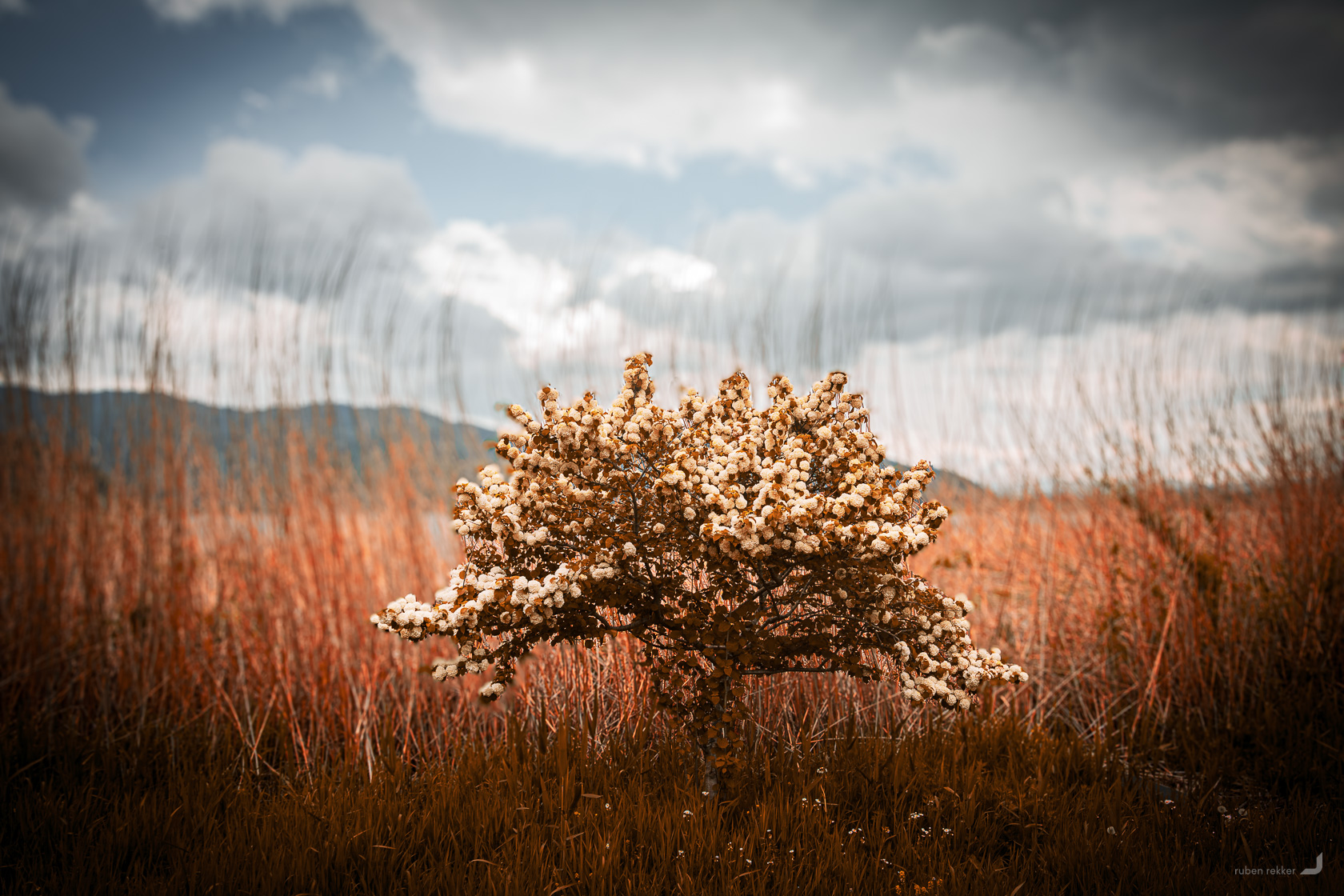
Viburnum plicatum, or Japanese Snowball, in front of the lake (left) while a swan gently swims across (right).

Mount Fuji behind Lake Kawaguchi. At 3,776 meters, Mount Fuji is the tallest mountain in Japan.
From traffic controllers bowing to every passing car to bus drivers calling out each stop, there’s a distinct sense of grace and care in every action. As James Cameron once said, “If you set your goals ridiculously high and it’s a failure, you will fail above everyone else’s success.” Yet, as someone pointed out, striving for perfection can be stressful. Hopefully, a healthy balance will be found.
As for me, this was a brief visit which I happily made together with my mum. However, I’ve only just begun to explore Japan’s diverse and unique charm, and I can only hope to return one day to discover more of its crazy idyllic corners.