
When I left Europe in 2010, the grass had seemed so much greener so much further away and the further away, the greener it probably was. I had yet to discover all the different shades of green in Europe.
I had five weeks to get from Napoli in Italy to Istanbul in Turkey, to be on time for a university exchange program lasting one week.
Italy
Napoli
Arriving in San Francisco from Sydney was a significant difference in culture. Arriving in Morocco from New York was an even more significant difference in culture. Arriving in Naples from Marrakesh confidently continued the trend.
Naples (or Napoli, as the locals call it) was founded by the Greeks in the 8th century BCE as Neapolis – making it one of the oldest continuously inhabited cities in the world. Its centre is a UNESCO heritage site and is located nearby Mount Vesuvius that erupted in AD 79, literally bringing the civilisations of Pompeii and Herculaneum to a halt at the time.
Hostel Life
While looking for hostels in Naples I was surprised by some of the rules. One hostel had an age limit of 28, while another required check-in before 3.30pm. Are they aware that some flights arrive later than that? After finally arriving at a hostel that was willing to accept me, an elderly receptionist (who had a cunning resemblance to Santa Claus – I suppose those gifts don’t pay for themselves?), let me to my dorm. I was to share it with 5 other guys, who commenced a fierce snoring contest while assigning me as the unwitting referee, all under an exit light as bright as the sun. No sleep for the unwitting, and unfortunately I developed a cold that lasted for the remainder of the trip.

Looking out over the south east of Napoli from the Certosa e Museo di San Martino.

Chiostri di San Martino from the Certosa e Museo di San Martino.

Mount Vesuvius behind the city of Napoli.

Piazza Giovanni Bovio at night in the centre of Napoli.

The ancient streets of Pompeii at the base of Mount Vesuvius.
You may have noticed that there were no 70-200 mm shots in my Morocco post. That’s because, in a twist of fate (or clumsiness, depending on how you look at it), I dropped my beloved 70-200 lens out of the van at a campsite in Morro Bay, USA. There simply wasn’t enough time left in the U.S. to get it repaired, and let’s just say no one in Morocco was brave enough to attempt a fix. Fortunately, I stumbled upon a camera store in Naples that could help – though, as you might guess, it would take some time.
And indeed, it did take some time – but it was very much needed to try to understand the local ways of the “new city” (Neapolis means new city in Greek). Accommodation hosts would take their time explaining every single detail (“remember to open the blinds before opening the window”, “let me slowly write down what you can buy in this restaurant on this map: salad, seafood, mozarella …”) while bluntly asking to rate the experience as a 10/10. Piazza Garibaldi has open air “recyclables” displayed free to take (rubbish piles) while it simultaneously and spontaneously could turn into a hyper mobile market at any time (until the police show up). Street maps or signs are frequently a fun challenge to read due to the work of local graffiti artists. Maradona is thoroughly revered as a God and cafe patrons would shoo you out of the building if you dared to open a laptop.
Napoli definitely has character, though it wasn’t an easy feat to get a hold of. I should definitely brush up my Italian next time.
Positano
I rented a scooter that took me along the famous Amalfi coast, passing Mount Vesuvius, Positano and ending at San Cosma. The Amalfi coast, also a UNESCO heritage site, has one ancient village after another built alongside the dramatic cliffs.


Positano during the day and at night (top) and the Chiesa Collegiata di Santa Maria near Atrani (bottom).
After leaving Amalfi, I rented a car with the plan to drop it off in Bari, located on the opposite side of Italy’s boot. From Bari, I’d catch a ferry across the Adriatic Sea, which would let me continue my journey overland towards Greece.
While driving across the Italian countryside, I passed one unexpectedly picturesque town after the other. It felt like I had driven straight into a fairy tale and that Italy had decided to throw me a surprise tour of its lesser-known gems.
Ostuni
Ostuni, also known as the “Città Bianca” or the “White City” for its whitewashed buildings, has a history that dates back to the Stone Age. During the Middle Ages, Ostuni became a key defensive stronghold due to its hilltop location.
From above, the Duomo di Santa Maria Assunta and Chiesa di San Vito martire stand atop the hill, offering a coloured contrast to the whitewashed town below.
La Città Bianca from above in Ostuni.

Narrow alleys and iconic white facades reflect Ostuni’s Mediterranean and Moorish influences

Snapshot of the entrance to a home that looks out at the sea.

La Città Bianca from above in Ostuni.
Flying by the ancient Ostuni or “white city”.
Matera
Similar to Napoli, Matera is also one of the oldest continuously inhabited cities in the world. There are ancient caves that date back to Stone Age, or the Palaeolithic period, when mammoths roamed the earth and the last Ice Age was just winding down.

Cattedrale di Maria Santissima della Bruna e Sant’Eustachio at sunset. Declared a UNESCO World Heritage Site in 1993, the area has been inhabited by populations as far as 12,000 years ago.

The Chiesa Rupestre di Santa Maria di Idris behind the Torrente Gravina river.

Matera at sundown from the Convent of Saint Agostino.
Alberobello
Alberobello, located in Italy’s Puglia region, is renowned for its “trulli” – unique, cone-shaped stone houses that date back to the 14th century. Built without mortar to avoid taxation by the Kingdom of Naples, these dry-stone constructions could be dismantled quickly during inspections.

Alberobello is renowned for its trulli—unique, cone-shaped stone houses that date back to the 14th century.
Polignano a Mare
Polignano “at sea” is positioned on limestone cliffs overlooking the Adriatic Sea. In the past, it served as a strategic trading hub and a defensive site. The town flourished under Byzantine, Norman, and later Venetian rule, each leaving their mark on its culture and architecture.

Polignano a Mare from Pendma Chiatt (Pietra Piatta).
Flying over the coastal cliffs at the edge of Polignano a Mare.


Farmer’s versions of trulli, or cone-shaped houses, are scattered along side the road to Bari and are used for storage or shelters.
After dropping off the car in Bari, it took me 2 hours to drag my luggage from the rental company to the ferry port, only to be confronted with a no walking sign at its entrance. Did I now have to find a taxi so that it could drive me the final 20 meters into the port? There was not a taxi in sight. Pressured for time, I decided to ignore the sign and walk in anyway, frantically trying to avoid eye contact with the gatekeepers. They either didn’t see me or didn’t care cause I managed to make it to the ticket office just fine.
Taking the ferry from Bari in Italy to Durres in Albania
Heads up, your email confirmation of your ferry booking is not a ticket, you need to use it to pick up your ticket at the ticket office at the port at least four hours before departure (as Albania is outside of the Schengen area).
Shuttle buses depart from the ticket office at the port, taking passengers to the dock where the ferry awaits. After a few hours of waiting at the ticket office (it took a while), a shuttle bus took me to the entrance of a ferry which contained a labyrinth that could easily compete with the medinas in Morocco. The rooms contained a tiny bunk bed and a bathroom, which actually seemed pretty cosy. We arrived in Albania the following morning.
Albania
Albania, one of Europe’s last holdouts of communism until 1992, still wears its past in its architecture. Tirana’s centre still has a distinct, fairly concrete-heavy and utilitarian style though it’s changing fast. The city’s modern side shines through in its hip cafés and restaurants, where you’re treated to an incredibly tasty blend of Italian, Greek, and Turkish influences.
Arriving in Durrës
Getting off the ferry in Durrës, Albania, I quickly discovered two things I wish I’d known beforehand: Albania doesn’t use the euro (they have the lek), and the arrival port in Durrës has neither Wi-Fi nor the means to buy a SIM card. So I had no internet, no money, and no idea how to get to my hostel in Tirana, Albania’s capital.
Thankfully, there was an ATM at the port, and even more thankfully, it accepted my card. I found a bus heading for Tirana, but only the notes I had received from the ATM were too large, angering the driver. On my way out he handed me some small notes back and told me to get off his bus. I realised later that he gave me way too little back, but I had accepted it as the price of my ignorance.
Stranded on the outskirts of Tirana, I asked several people how to get to the city centre. Eventually, I did find a local bus (which I could now pay with smaller notes). As we approached the city, all I had to go by was trying to sense when we were approaching a “city vibe” with important looking buildings.
After having exited thinking I had found the city centre vibe, I decided to look for a café with free Wi-Fi. It turned out that I was right in front of one and I realised that my hostel was only a short walk away. Lucky me.
Traveling further south, I was briefly held up by an electrocution event inside a hostel in Vlorë. My journey may have ended there, but luckily it didn’t. For now it fortunately serves as a reminder to always be careful, wherever you are.
Sarandë
Sarandë is located along the Albanian Riviera. It is located nearby the Ksamil Islands, the ancient ruins of Butrint (a UNESCO site), and the Blue Eye spring.
Multiple locals had asked me why I would go to Sarandë at this time of the year. It was low season and it was no weather to lay on the beach. Strolling through the town you could sense that it was still quietly preparing for the storm ahead called “summer”. Many bars and other places were closed but at the same time it was an excellent opportunity to get a sense of the town without the flood of tourists.
Hostel Life
It took me a while to find a hostel in Sarandë. The first host angered me after I overheard him sharing my electrocution story as entertainment to his guests. In the second hostel, I had to share the dorm with a middle aged conspiracy fanatic. The owner of the third hostel claimed that I had not paid for the second night when I had paid for two nights the night prior. Eventually I settled back in the first hostel as it did provide the best value for money.
Fly over Rozafa Bay, a short motorbike ride north of Sarandë.


Rozafa Bay (above) and Gjipe Beach (bottom) from above.

Even though Drymades had glowing reviews in my travel guide book, praising its untouched nature, it was no longer as pristine as advertised when I arrived. New built emerges repeatedly along the coastline.
-
Palasa Beach
Albania


Sheep are shepherded over the road in Dhërmi.
Dhërmi along the Albanian Riviera.

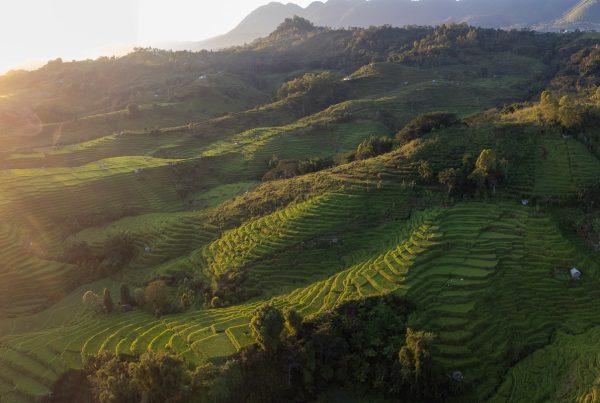
Hills of the Albanian Riviera.

Grass and egrets in Lake Butrint.
The “Syri i Kaltër” or the “Blue Eye” is a natural spring and source of the Bistricë river, which ends in the Ionian Sea south of Sarandë. Divers have descendent 50 meters but have not yet determined how much deeper the spring goes.

Butrint, a UNESCO World Heritage Site, has evidence of first settlements between the 10th and 8th century BC. The archaeological remains reflect a blend of Greek, Roman, Byzantine and Venetian cultures.
Getting into Greece from Sarandë was a lot easier than anticipated. Ferries to the Greek island of Corfu depart daily and only take about 40 min.
Greece
Corfu
Corfu, a Greek island in the Ionian Sea, is known for its beautiful beaches and Venetian-influenced architecture. The inner Old Town is listed as a UNESCO heritage site. Although I wasn’t quite prepared for the large price increases compared to Albania.

East coast of Corfu near Avramis and the Kontogialos Harbour.
With only 9 days left until the study in Istanbul would start, I discovered a bus that could take me all the way from Corfu to Athens. It would cross the Ionian Sea by ferry and would take about 8 hours.
Athens
Athens is a city where ancient history and modern life collide. Known as the cradle of Western civilisation, it’s home to iconic landmarks like the Acropolis and Parthenon, offering a glimpse into its rich heritage.


The Holy Church of Saint George of Lycabettus on top of the Lycabettus Hill from the outside (left) and the inside (right).

The ancient Acropolis from the Lycabettus Hill.
Having never visited any of the Greek Islands in my adult life, I now had a couple of days to take the ferry to Paros and Santorini.
Paros
Paros is one of the roughly 1500 islands in the Aegian Sea. It is known for its traditional whitewashed villages, beautiful beaches, and laid-back atmosphere.

A Greek orthodox church amongst other houses in Paros.
A Greek Orthodox church, “Ιερός Ναός Αναλήψεως Αγίας Καλής”, on the Ag. Kali island near Paros.


Greek Orthodox churches: Ιερός Ναός Αναλήψεως Αγίας Καλής (top left), St. Antonios Monastery (top right) and Saint Nicholas the Rich (bottom).
St. Antonios Monastery on Paros from above.

Paros from the St. Antonios Monastery.

A traditional Greek windmill in Marmara, Paros.

A lighthouse, Ακρωτήρι Κόρακας, guiding sea farers in Paros.
After two nights in Paros, a quick ferry ride took me to Santorini.
Santorini
Santorini truly is a romantic place. This had the perhaps unintended consequence that it had a way of constantly reminding me that I, in fact, walked around alone. Everywhere I looked, elegantly dressed couples smiled over the iconic white rooftops, snapping endless photos of one another.
Despite this constant reminder, I was so positively surprised about the kindness of the locals, the taste of their cuisine, the charm of their towns and the consistency of its stunning sunsets that it is now one of my favourite places. However, I can’t help but wonder if I’d feel the same if I’d visited in the summer – I’ve heard it can get unbearably crowded.
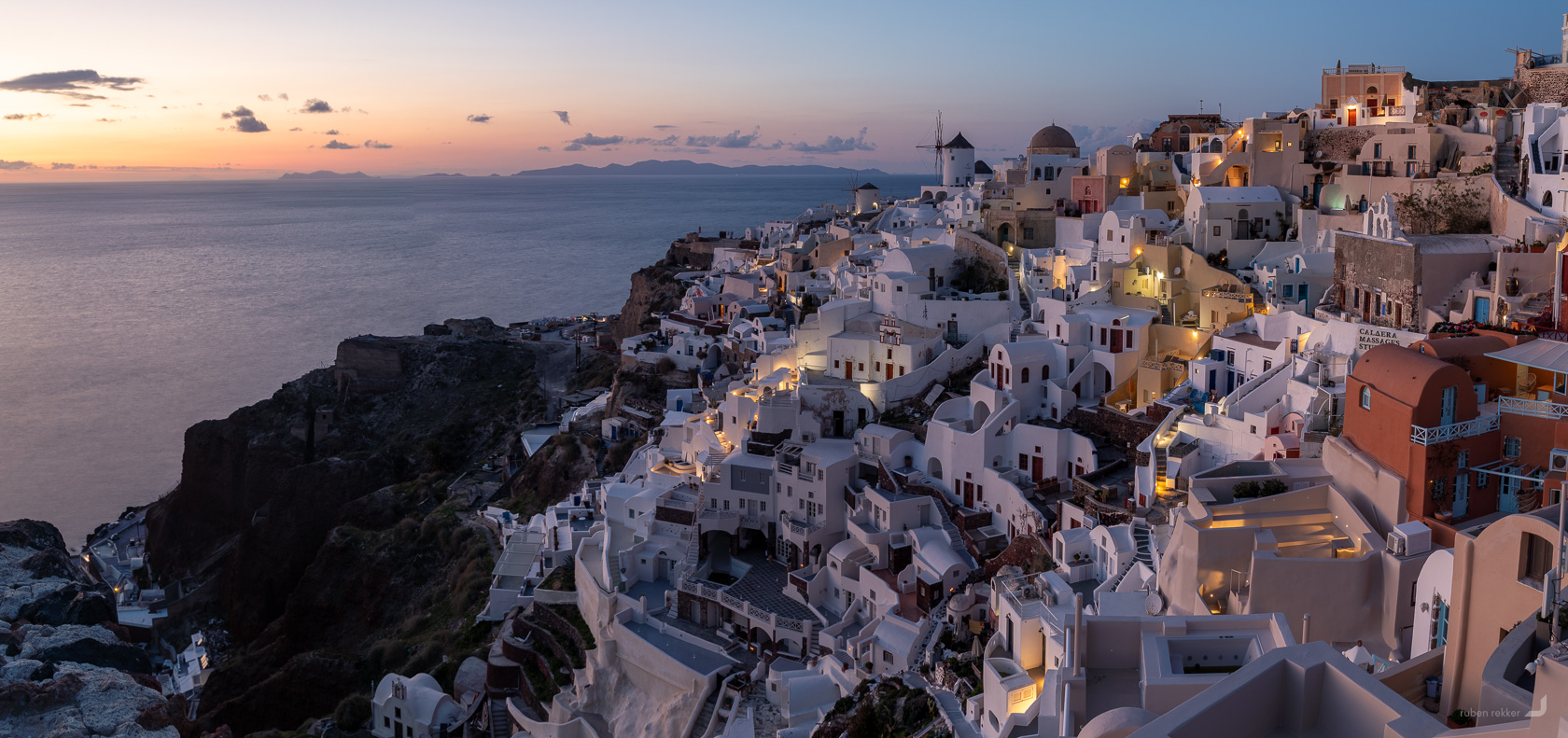
I apologise for the photo overload of Oia, it was just too pretty.

Church of Agios Nikolaos in Oia, Santorini.

Anastasi Church (blue dome, top right), was built in 1865 and Agios Spyridon (blue dome with blue bell tower) was built in 1867, in Oia, Santorini.
Oia from above, Santorini.

Oia at sunset, Santorini.
-
Oia
Greece


Looking out over ancient Thera, dating back to the 9th century BCE, on the Profitis Ilias Mountain.

Red Beach, “Κόκκινη Παραλία”, next to Black Beach and White Beach in Santorini.
A hidden path leads to the top of Skaros Rock, Santorini.

Looking out over the western side of Santorini.

Imerovigli and the Church Mother of Lord Theoskepasti on the Western side of Santorini.

A glimpse of the view from a balcony in Imerovigli, Santorini.
I could have easily lost track of time and spent many more days exploring the beauty of this island, but the clock was ticking to get to Istanbul. A week of study would commence at the Koç University as part of a global exchange program, that would count towards my 7th MBA subject.
Turkey
Istanbul
A key stop along the ancient Silk Road, Istanbul is a city where East meets West, rich in history, culture, and stunning architecture. Highlights include the majestic Hagia Sophia, the bustling Grand Bazaar, and the vibrant Bosphorus Strait. It offers a unique blend of ancient landmarks, lively markets, and modern cafes. With its diverse neighbourhoods, delicious food, and deep-rooted traditions, Istanbul feels like a living museum, but also a dynamic, ever-evolving city.
Most of my time was spent at Koç University, located nearly an hour and a half outside the city centre. Despite the commute, I made sure to explore whenever I had a free moment in this ancient city—far larger and more captivating than I’d ever imagined.

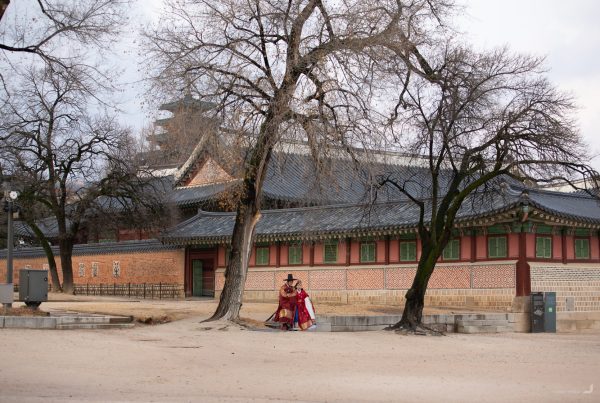
The Blue Mosque, Sultanahmet Camii, in Istanbul.


The Hagia Sophia, originally built as a cathedral in 537 AD, later became a mosque, then a museum, and now functions as a mosque again.
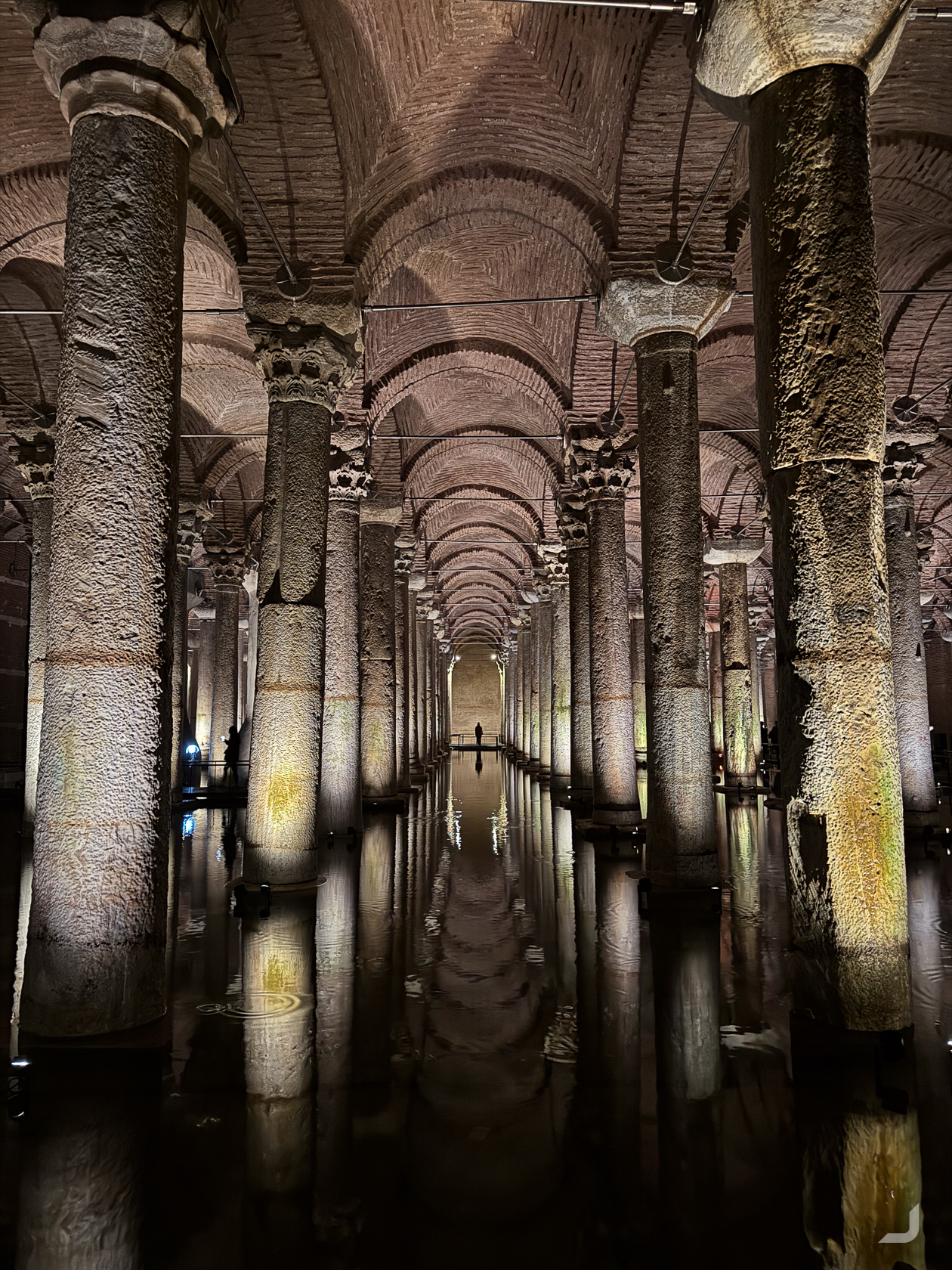
The Basilica Cistern in Istanbul, built by the Romans in the 6th century AD.
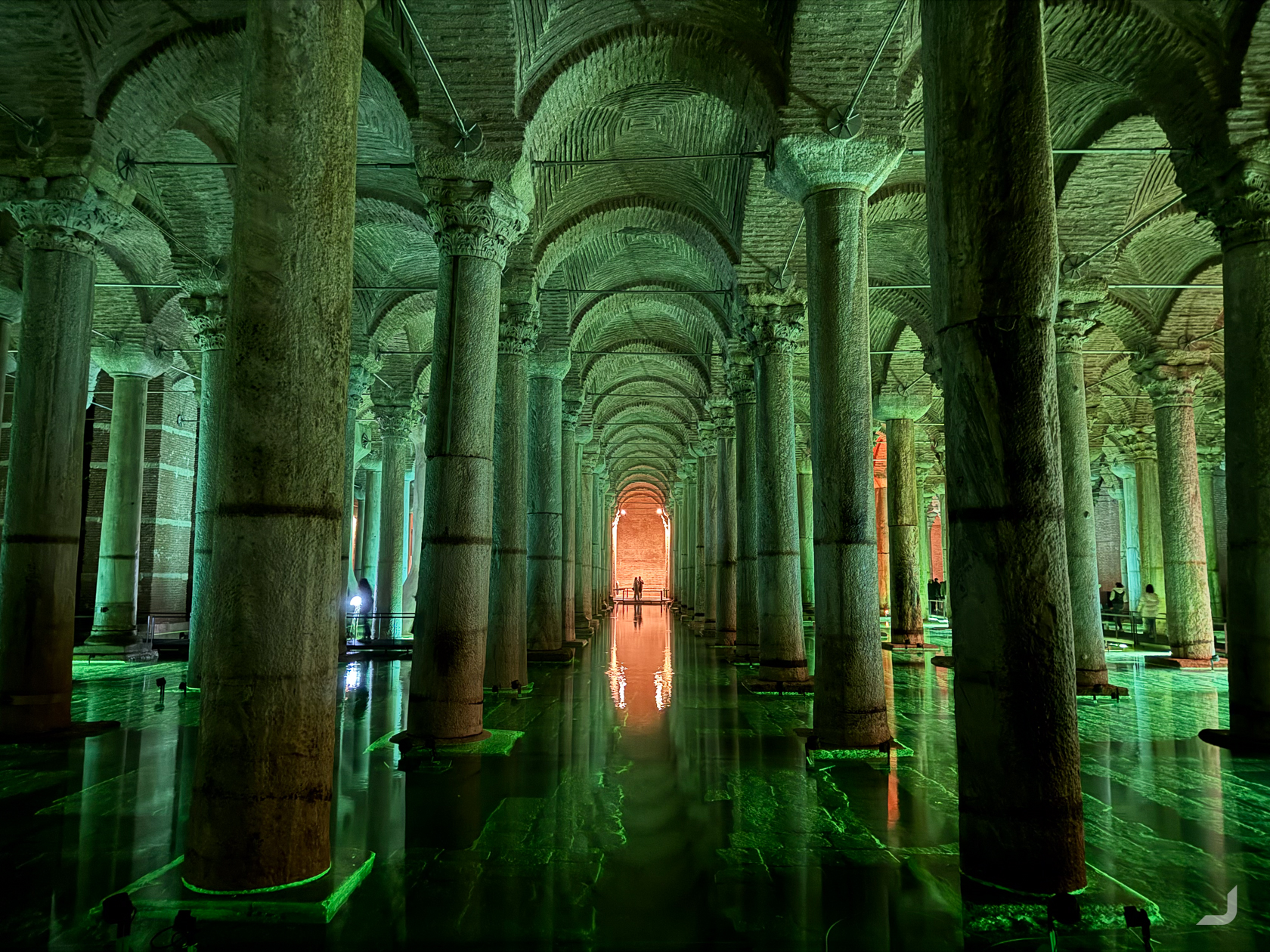
Different colours light up the 336 marble columns inside the Basilica Cistern. It was built to provide a water filtration system for the Great Palace of Constantinople and other buildings on the First Hill.

The Blue Mosque from a window in the Hagia Sophia.

Locals on Camcı Çeşmesi Ykş. near the centre of Istanbul.
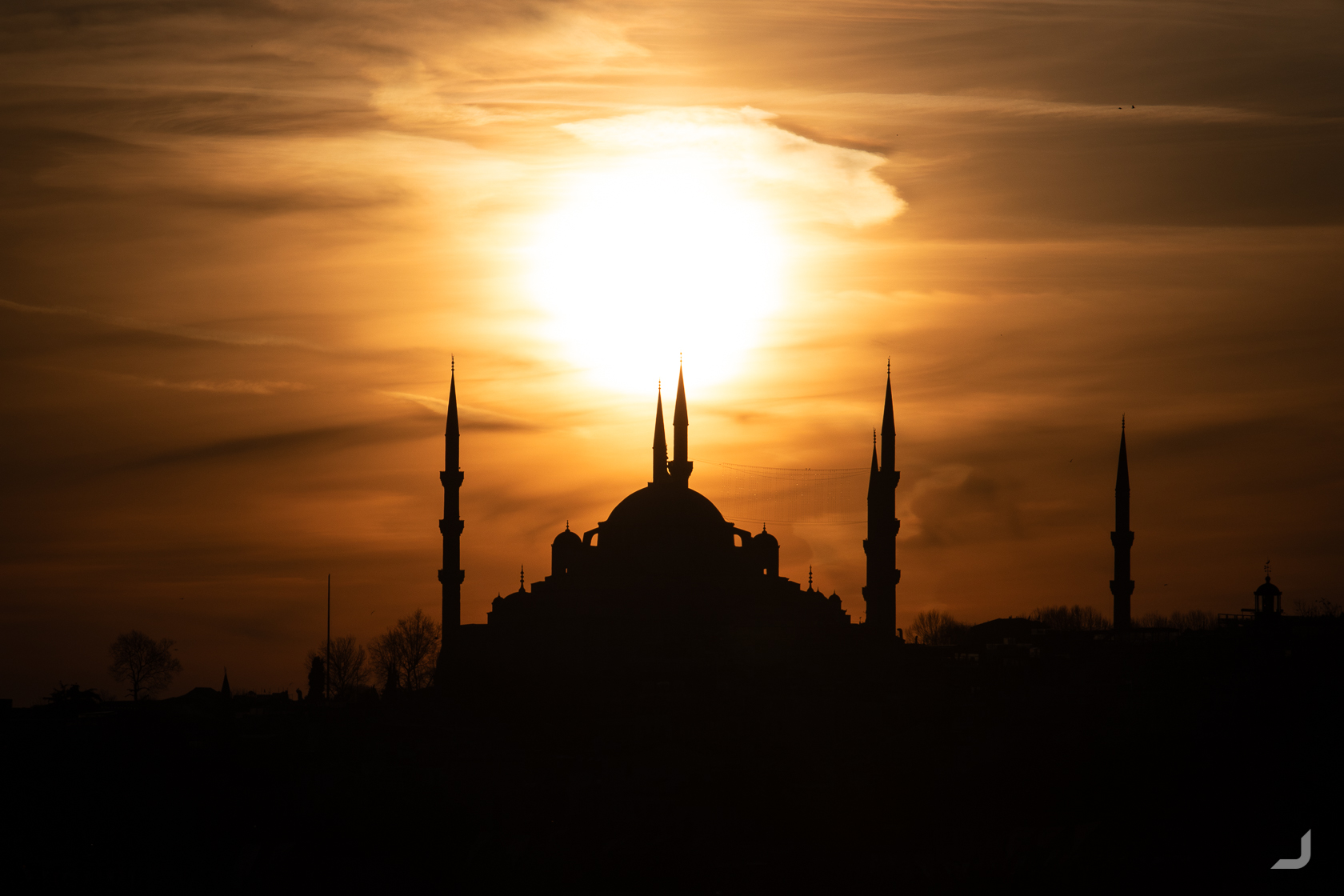
The Blue Mosque at sunset, Istanbul.
Since landing in Naples, driving to Bari, and bussing through Albania and Greece, a renewed sense of awe has taken hold of me for Europe’s diversity. My original plan was to journey overland, with the occasional ferry, from Gibraltar to Istanbul, while also exploring the west coast of Turkey.
However, that plan was cut in a third, and I still had barely scratched the surface of the countries I passed through. Once again, I’m reminded of the fact that the more you see, the more you realise that you actually haven’t seen anything.
Much like how I was astounded by the vastness and variety of China, I find myself equally surprised by the enormity and richness of Europe. When I left home in 2010, the grass always seemed greener on the other side, as if the farther away I went, the more vibrant it must become. Little did I know, Europe’s shades of green are actually pretty green too.
Maybe beauty is in the mind.