
When Korea came up in conversation, the instinctive reply was often, “North or South?” The usual response: “Have you ever met someone from North Korea?” made the point.
Knowledge of the country was little more than a handful of references: bibimbap, endless side dishes (I always wondered if you could go to a Korean restaurant and only get the free side dishes?), Gangnam Style, K-dramas, devoted gamers, and the cliché about plastic surgery. It felt long overdue to replace second-hand impressions with first-hand experience.
Seoul
서울
A glimpse of its long history is never far in Seoul. Hidden amongst its hyper modern buildings and sky scrapers are historical parks, ancient palaces and traditional houses called Hanoks.
Seoul is home to nearly 10 million people and it is located in a valley, surrounded by mountains.
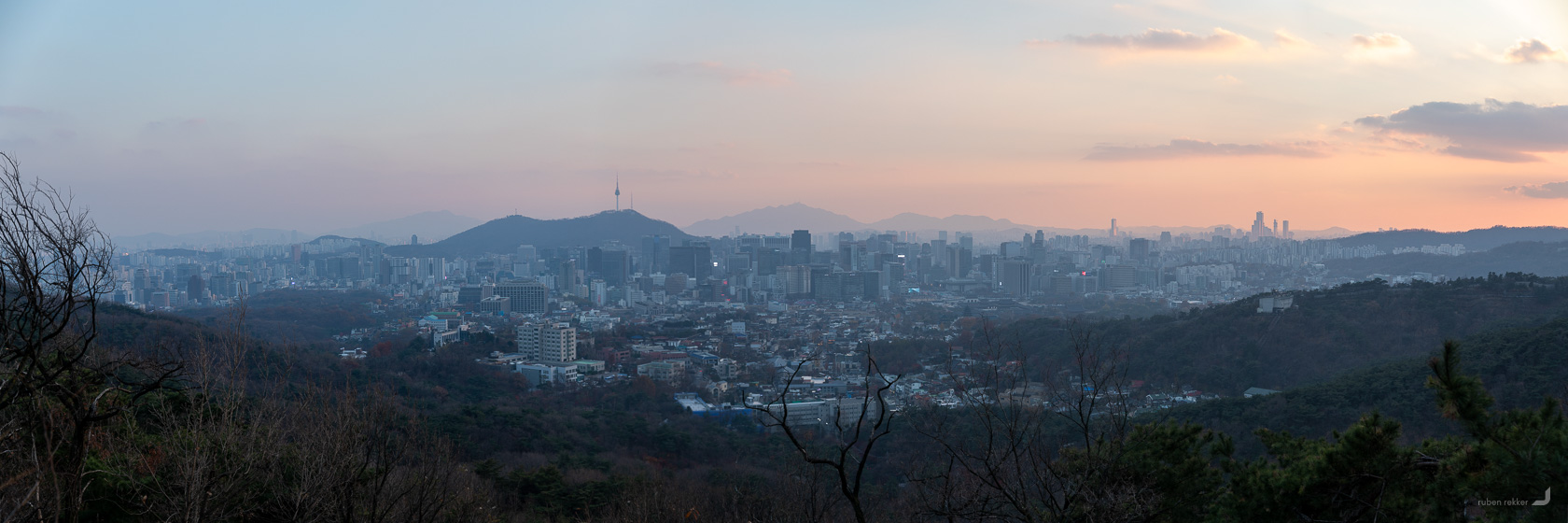
Seoul at sunset from the Samcheong Hill.
Since 2013, visitors to the Gyeongbokgung Palace don’t have to pay an entrance fee if they wear a hanbok, the traditional Korean attire. This has contributed to a revival of people, locals and foreigners, wearing hanboks amongst the ancient streets and palaces.
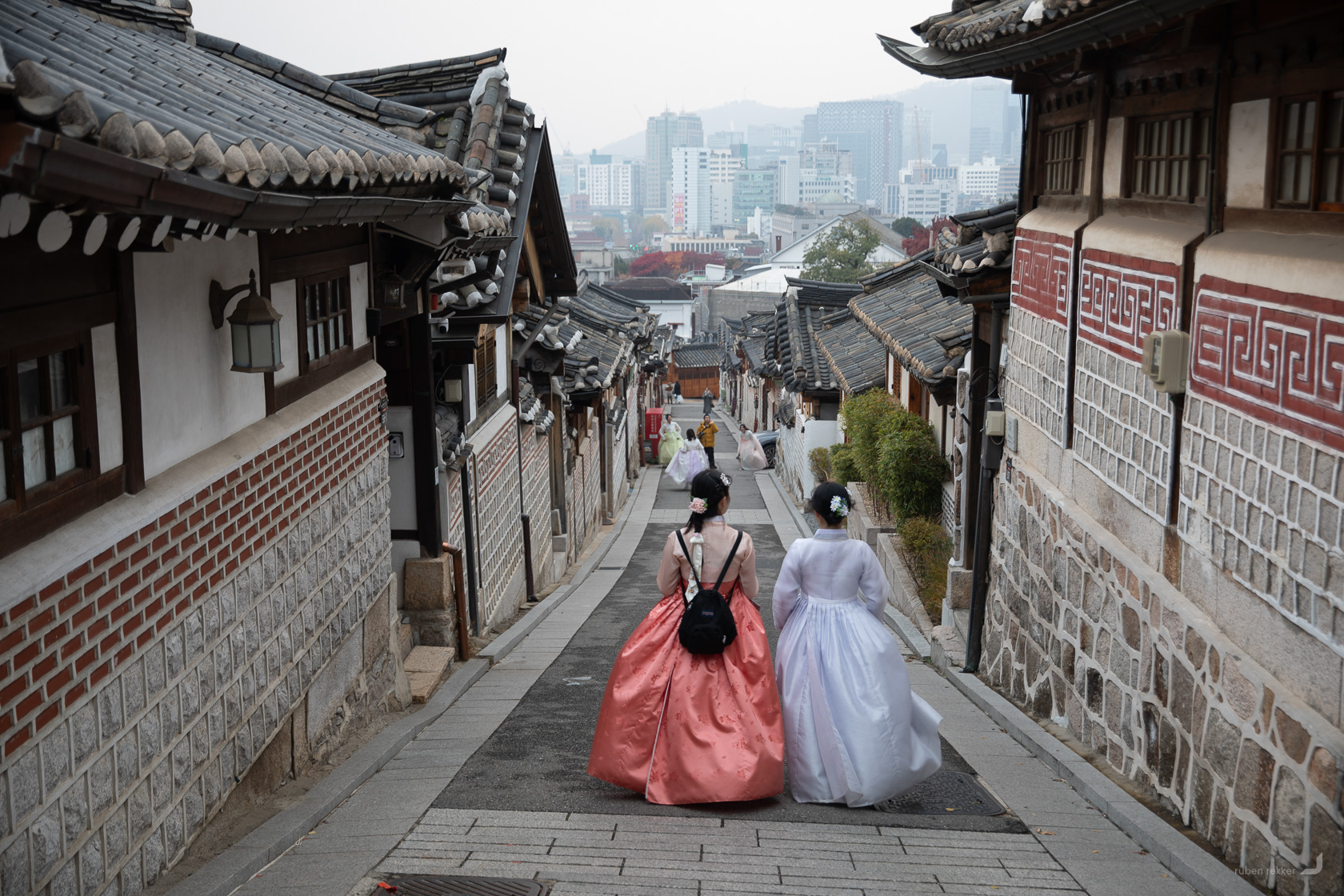
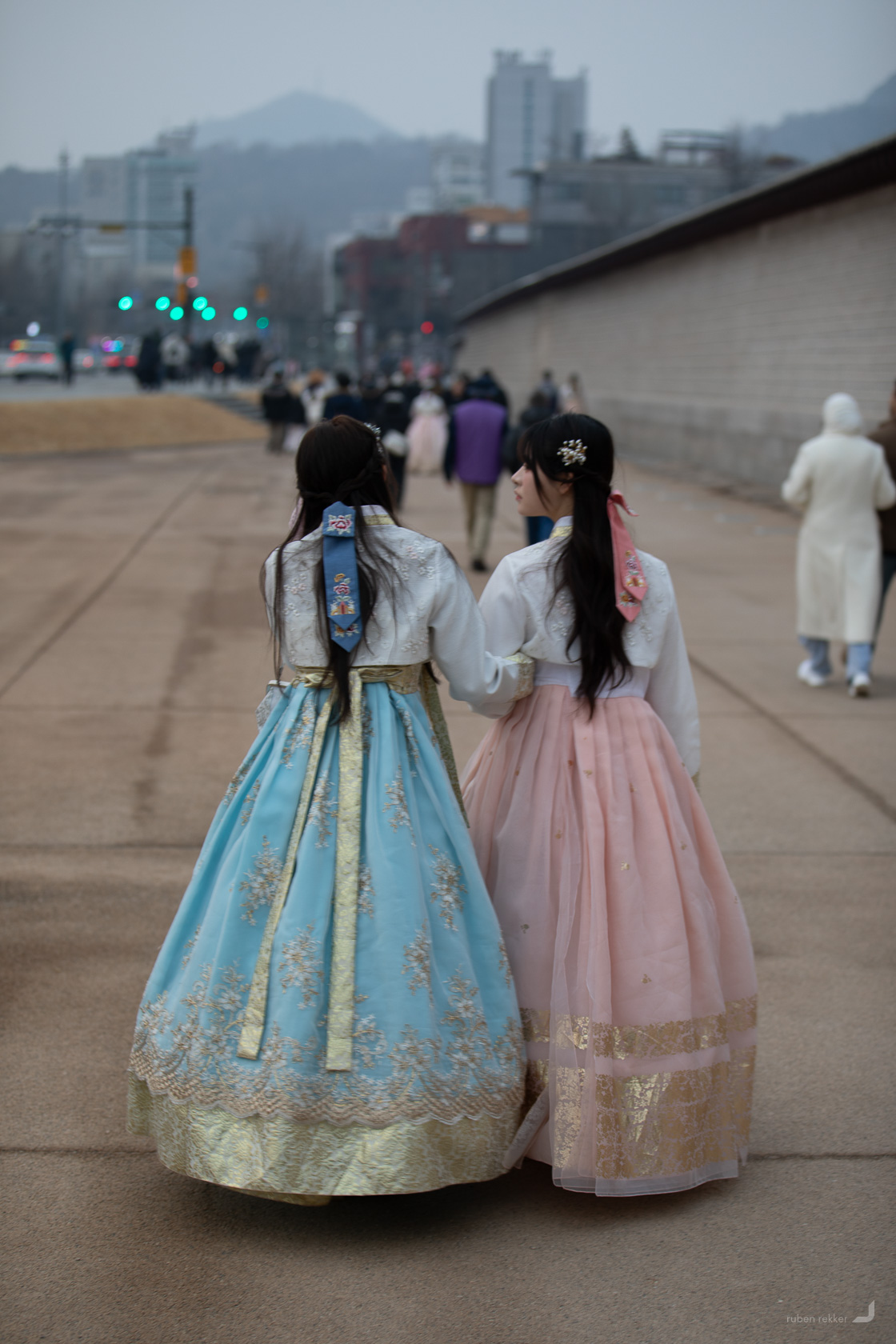
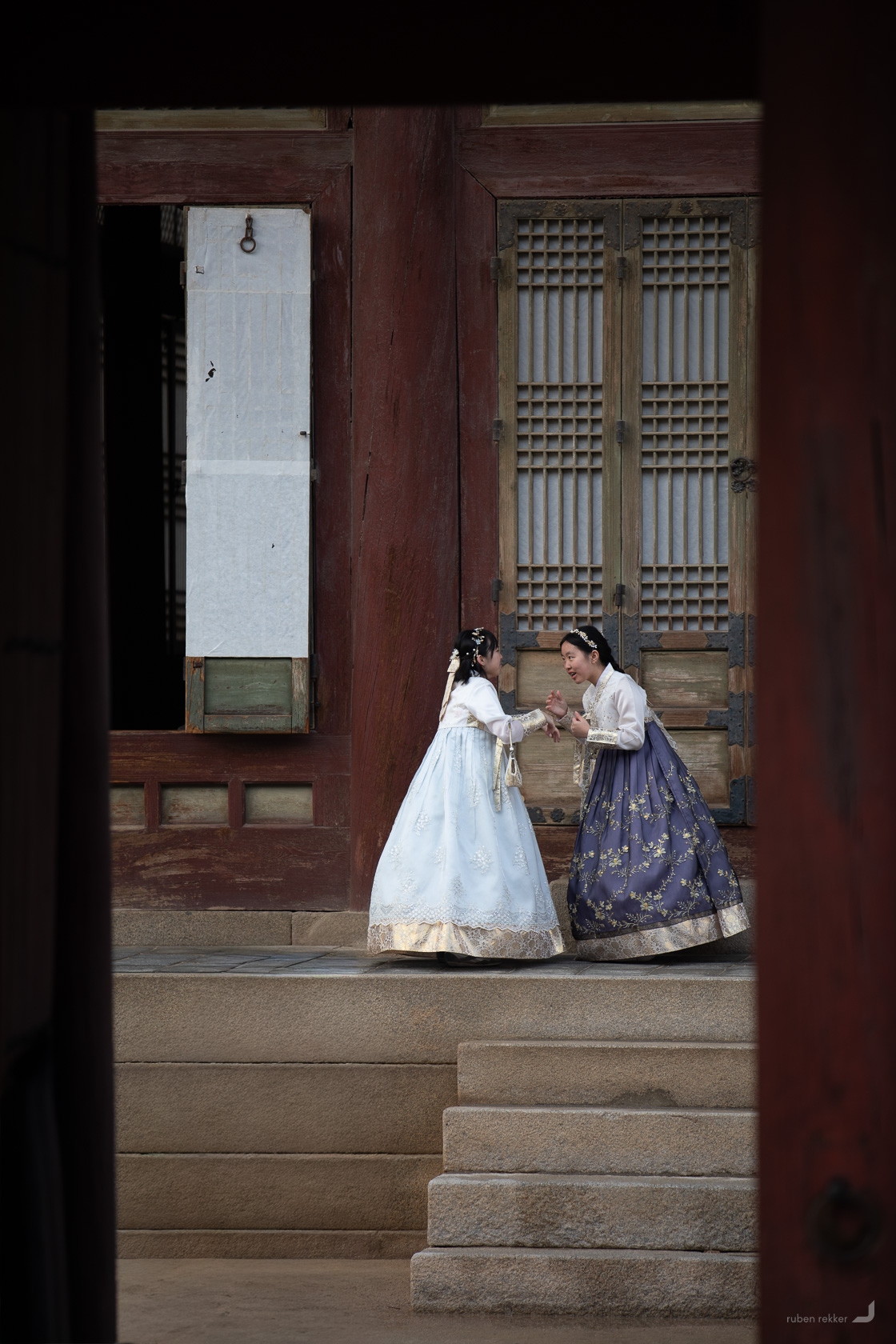
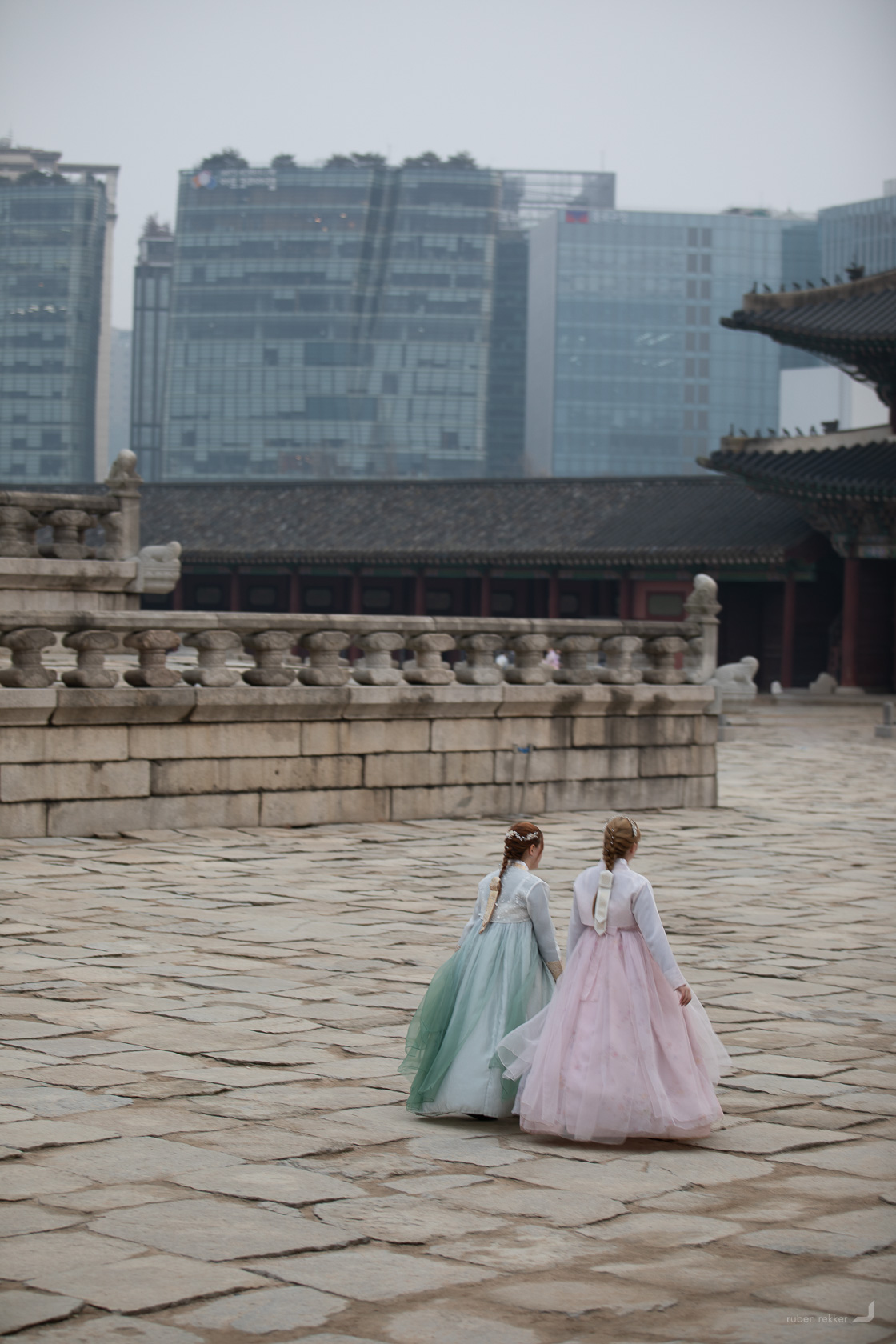
People wearing hanboks in the Geyongbokgung Palace and in nearby lanes in the Bukchon Hanok village.
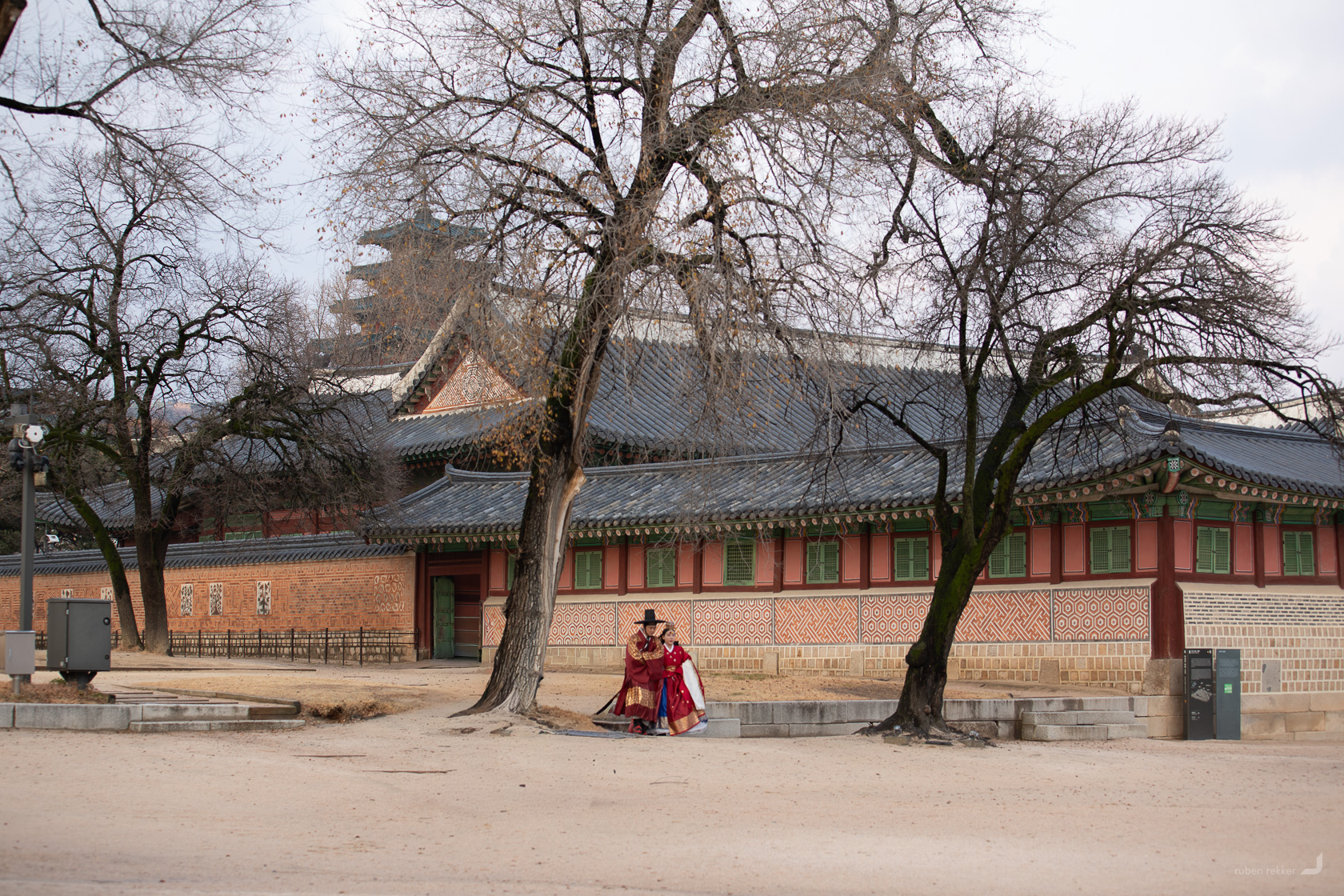
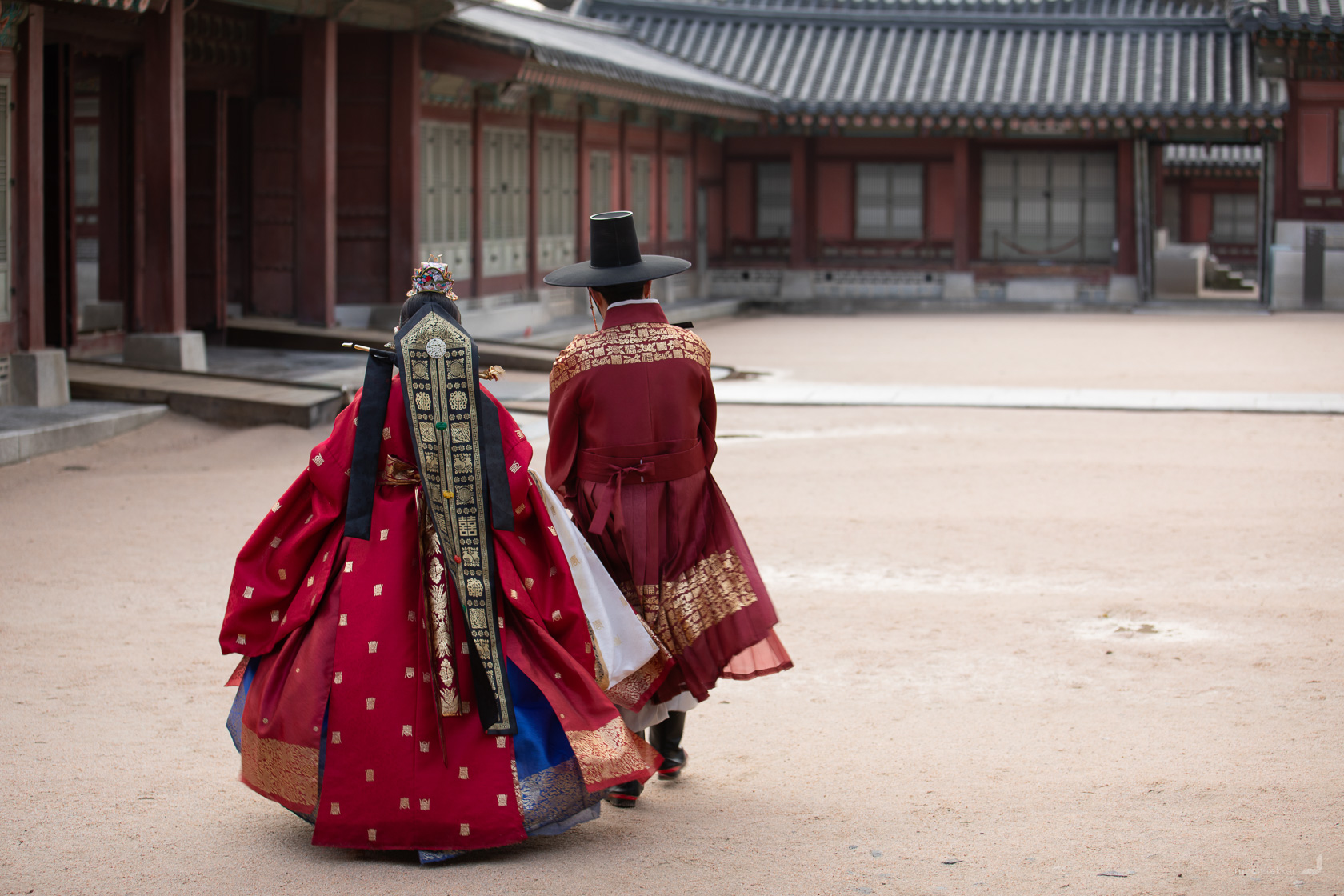
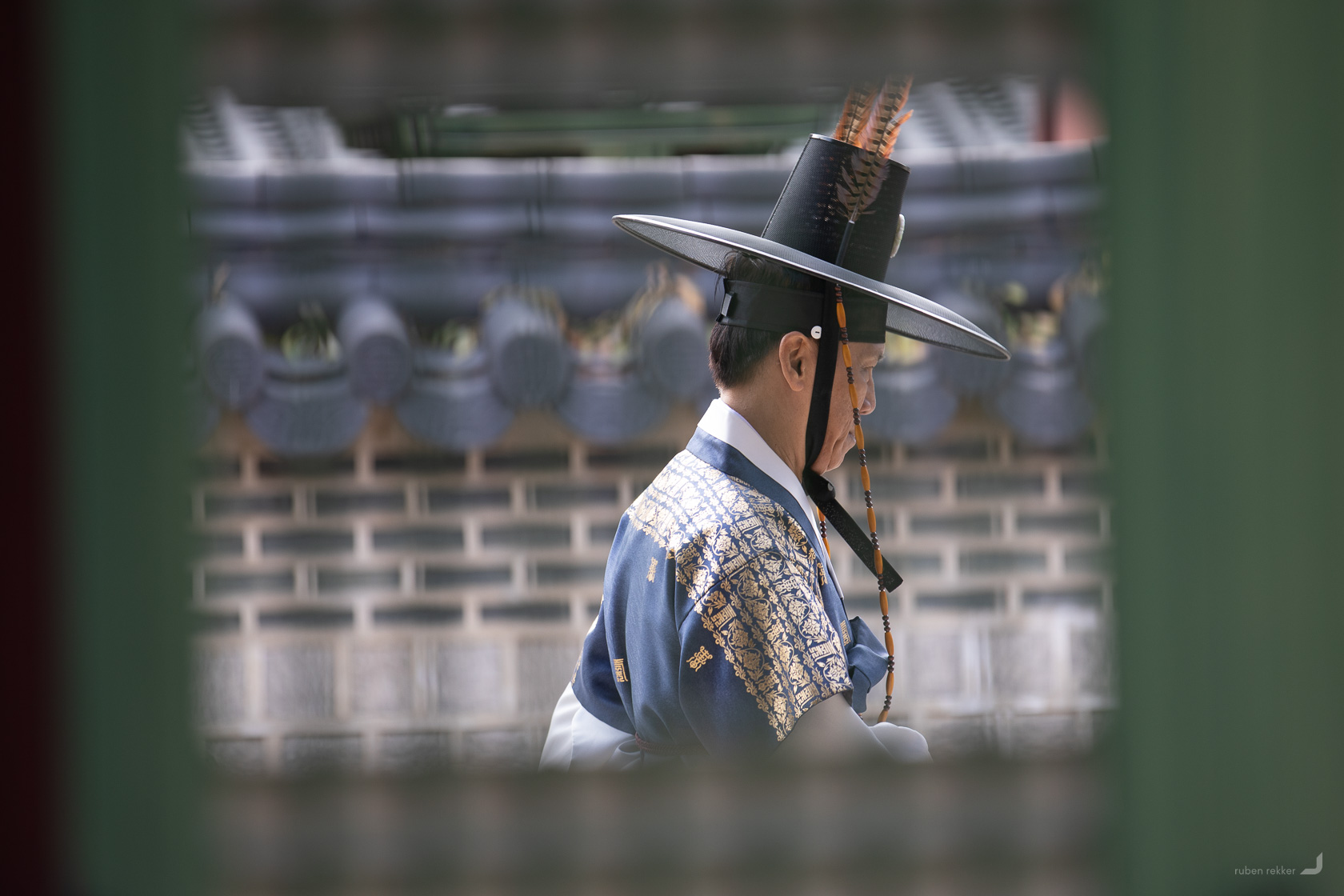
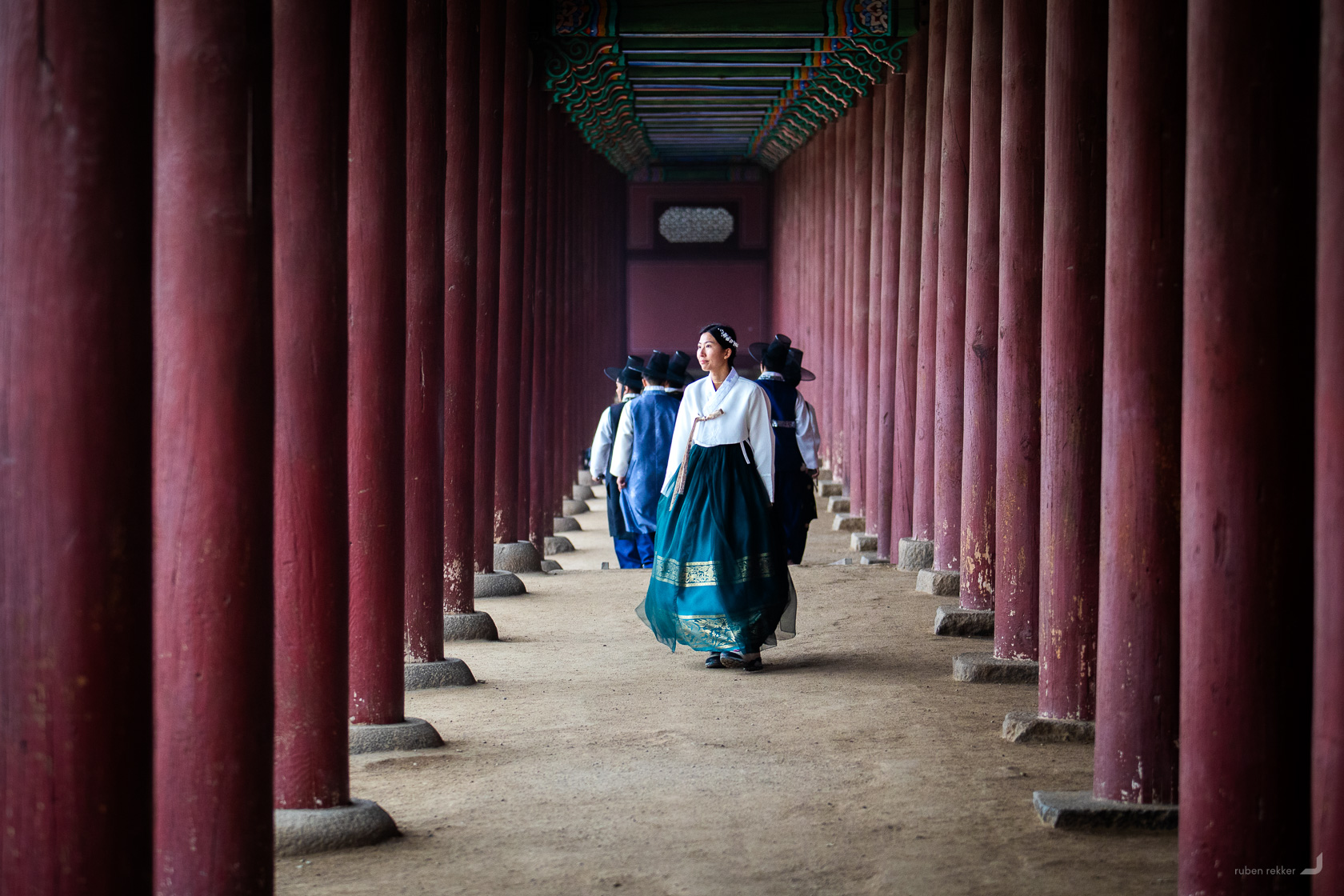
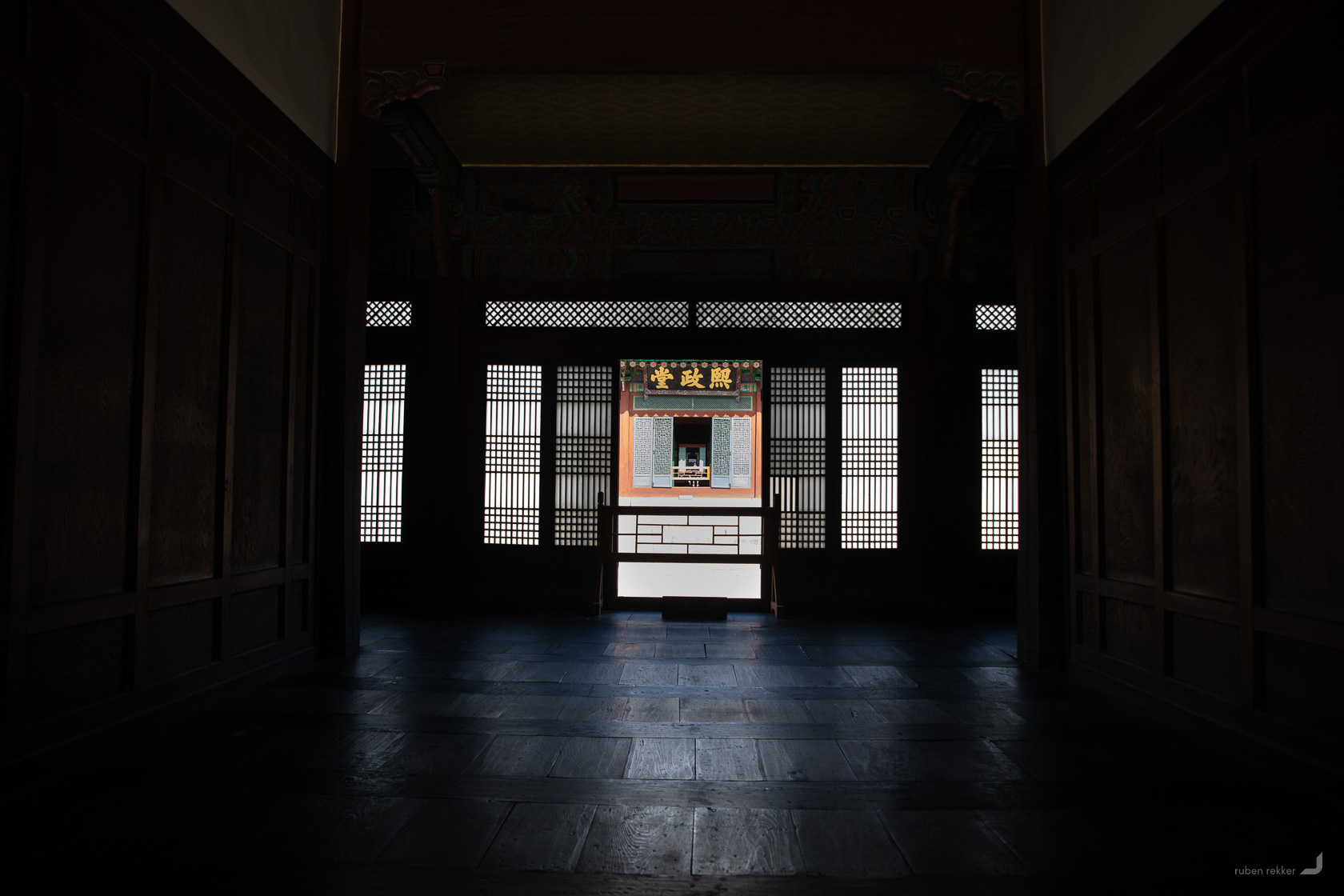
Images from within the Gyeongbokgung and Changdeokgung palaces.
Hanoks are traditional Korean houses that you’ll still find tucked between modern buildings in parts of Seoul, especially in neighbourhoods like Bukchon and Seochon. Built with natural materials such as wood, stone, and clay, some hanoks in Seoul are over 600 years old, dating back to the beginning of the Joseon Dynasty in the 14th century.
Hanoks are designed to live in harmony with the seasons: cool in the summer, warm in the winter thanks to the clever ondol underfloor heating system. Their curved tiled roofs, wooden beams, paper doors, and open courtyards takes you to an ancient environment that feels worlds away from the city’s high-rises. Today, many hanoks are preserved as cultural heritage sites or restored into homes, cafés, and guesthouses, offering a glimpse into Korea’s architectural past within the pulse of modern Seoul.
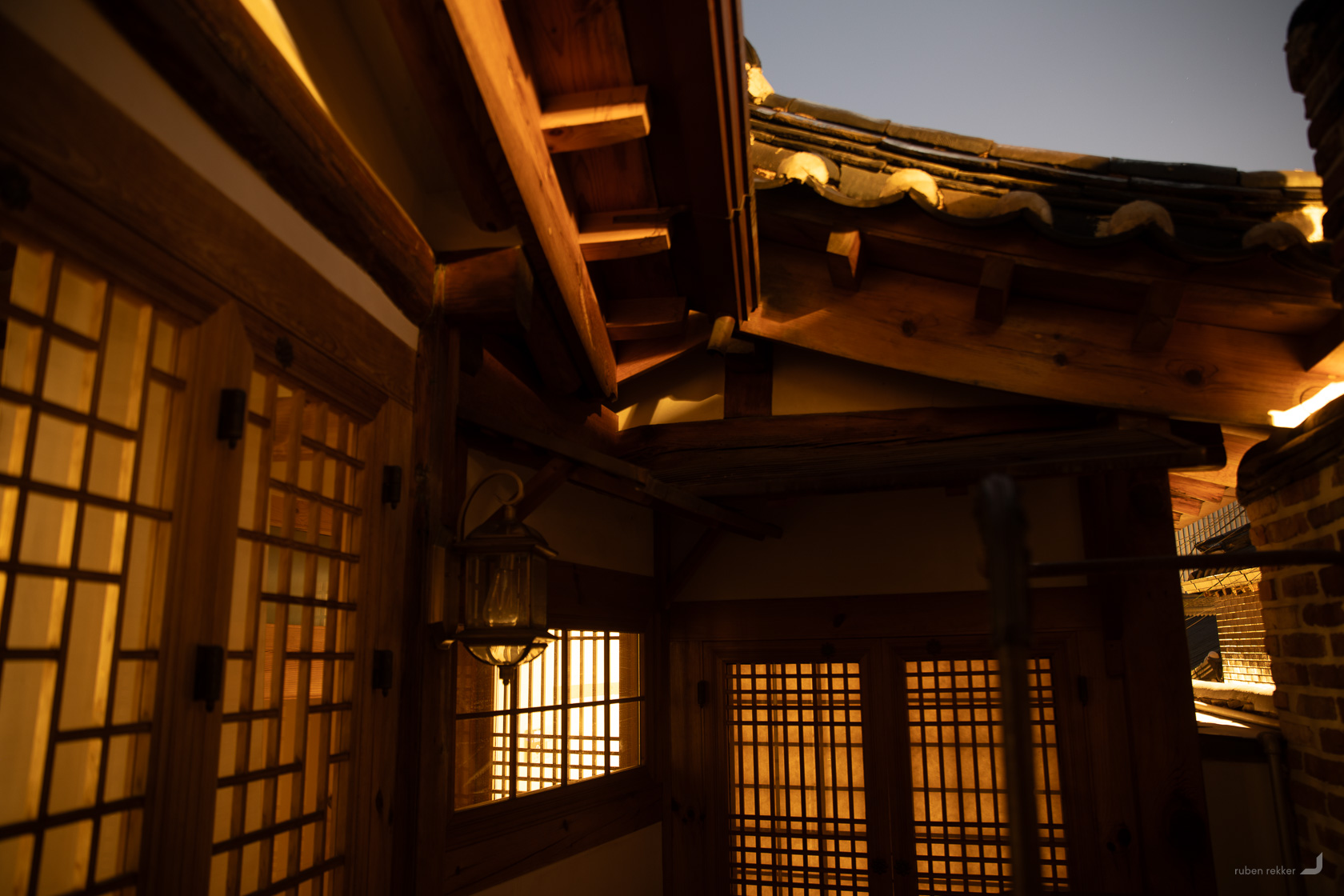
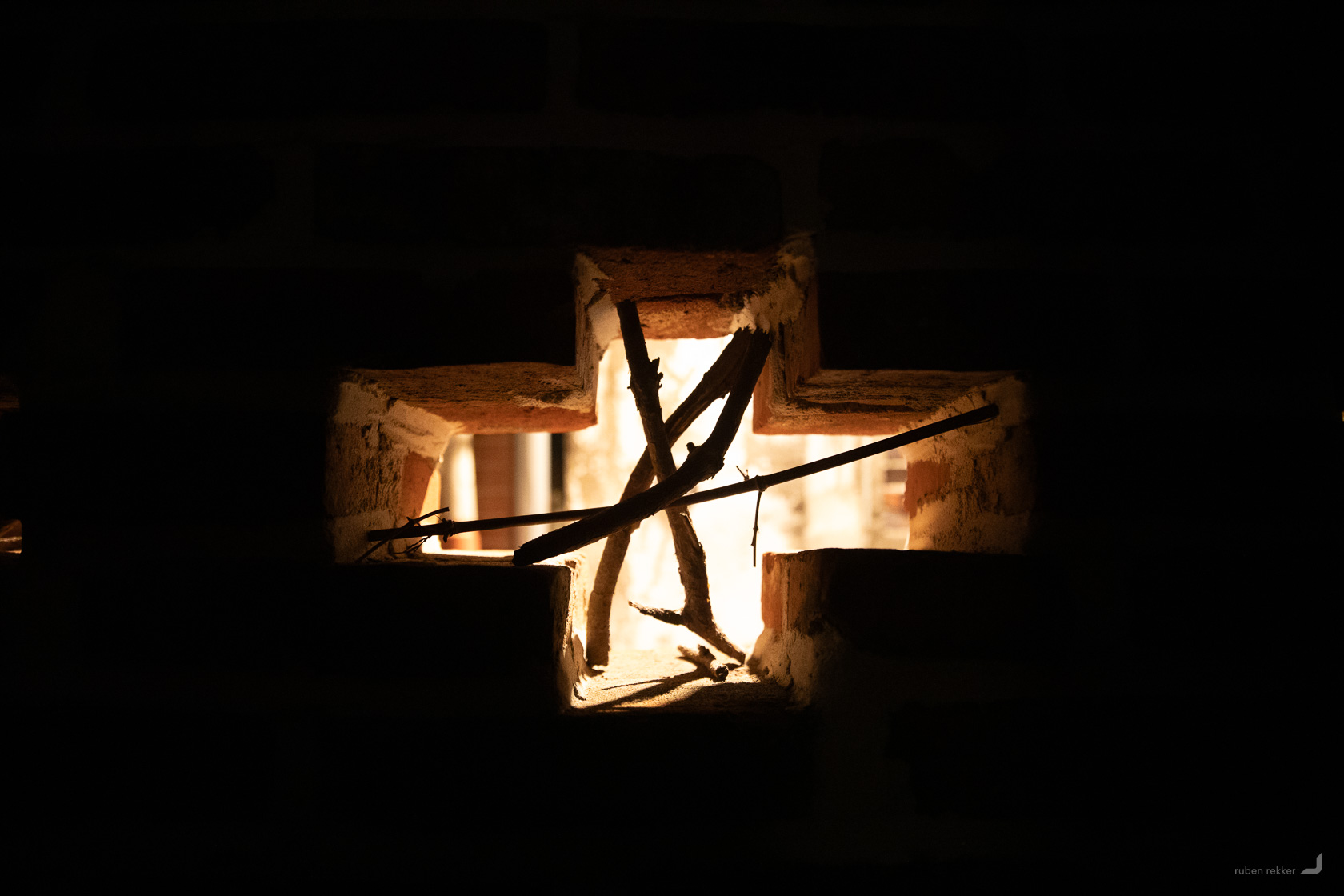
Glimpses of a hanok tucked away inside Seoul.
Just in the centre of Seoul, a 10.9 km urban stream was uncovered and restored in 2005 after decades hidden beneath roads and an elevated highway. Once a neglected waterway buried under concrete, it’s now a lively public corridor with walking paths, bridges, and greenery, starting off with a waterfall.
The restoration reduced traffic congestion and heat, improved air quality and biodiversity, becoming the home of many more species of frogs, fish and birds.
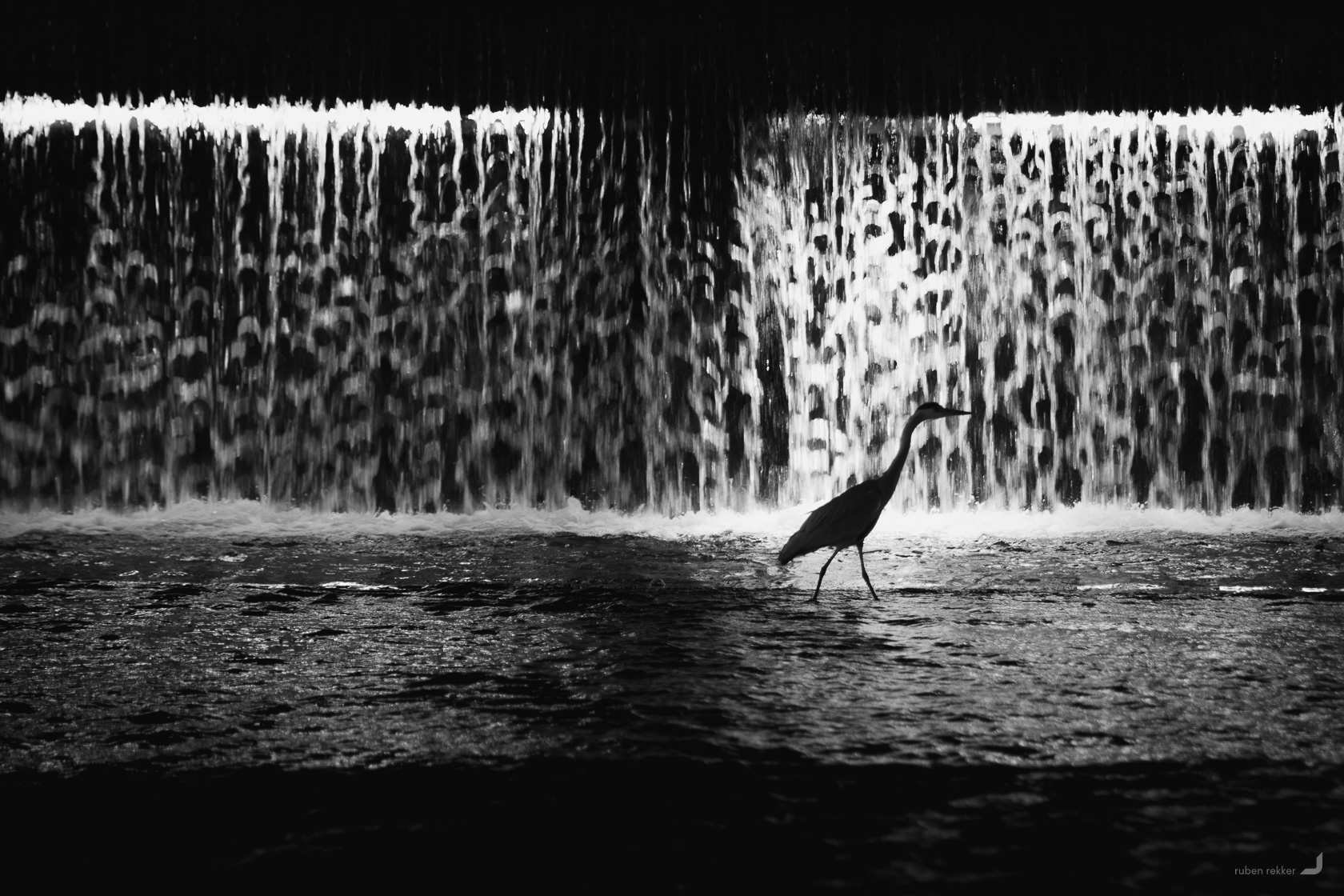
A grey heron passes by the Cheonggyecheon’s cascading waterfall.
Naejangsan National Park
내장산국립공원
Traveling further south by train to Gwangju revealed just how mountainous Korea really is, with rolling hills unfolding between pockets of bright green rice fields. A short trip north of the city lies Naejangsan National Park, renowned for its beautiful hiking trails and seasonal colours.
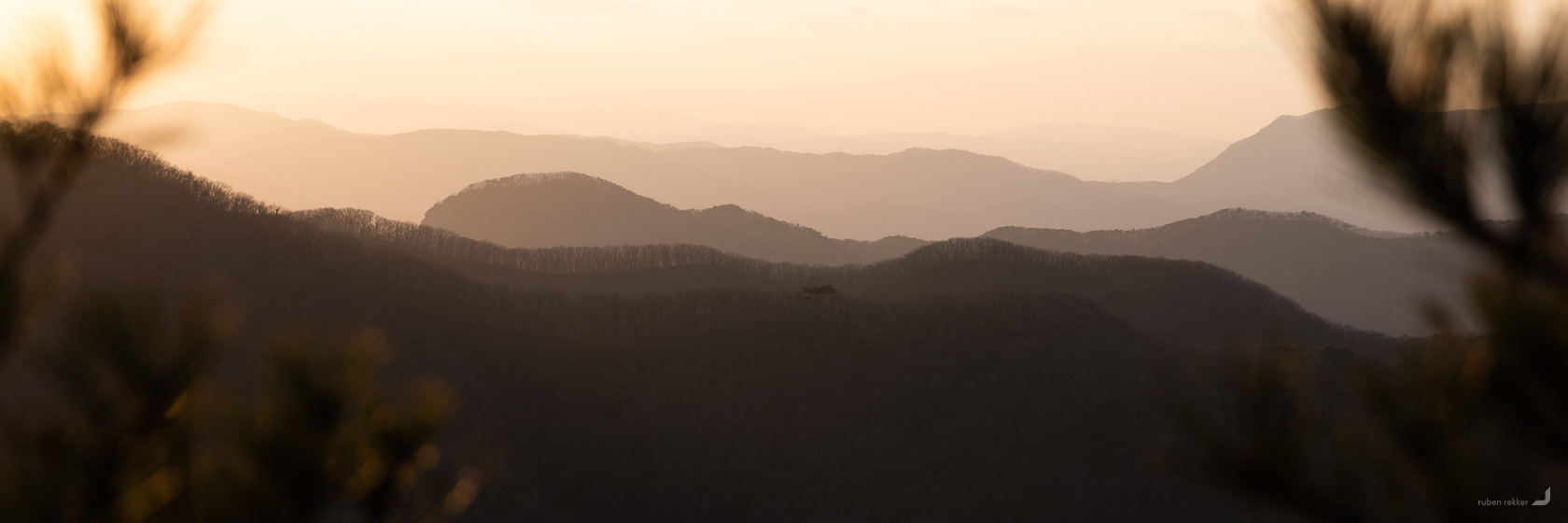
The view from the Baeghagbong trail nearing the Baeghagbong peak in Naejangsan National Park.
Along many of the hiking trails, temples offer visitors the chance to stay overnight in what are known as “temple stays.” These programs invite guests to experience life inside a working Buddhist temple, following the quiet daily rhythm of monastic practice.
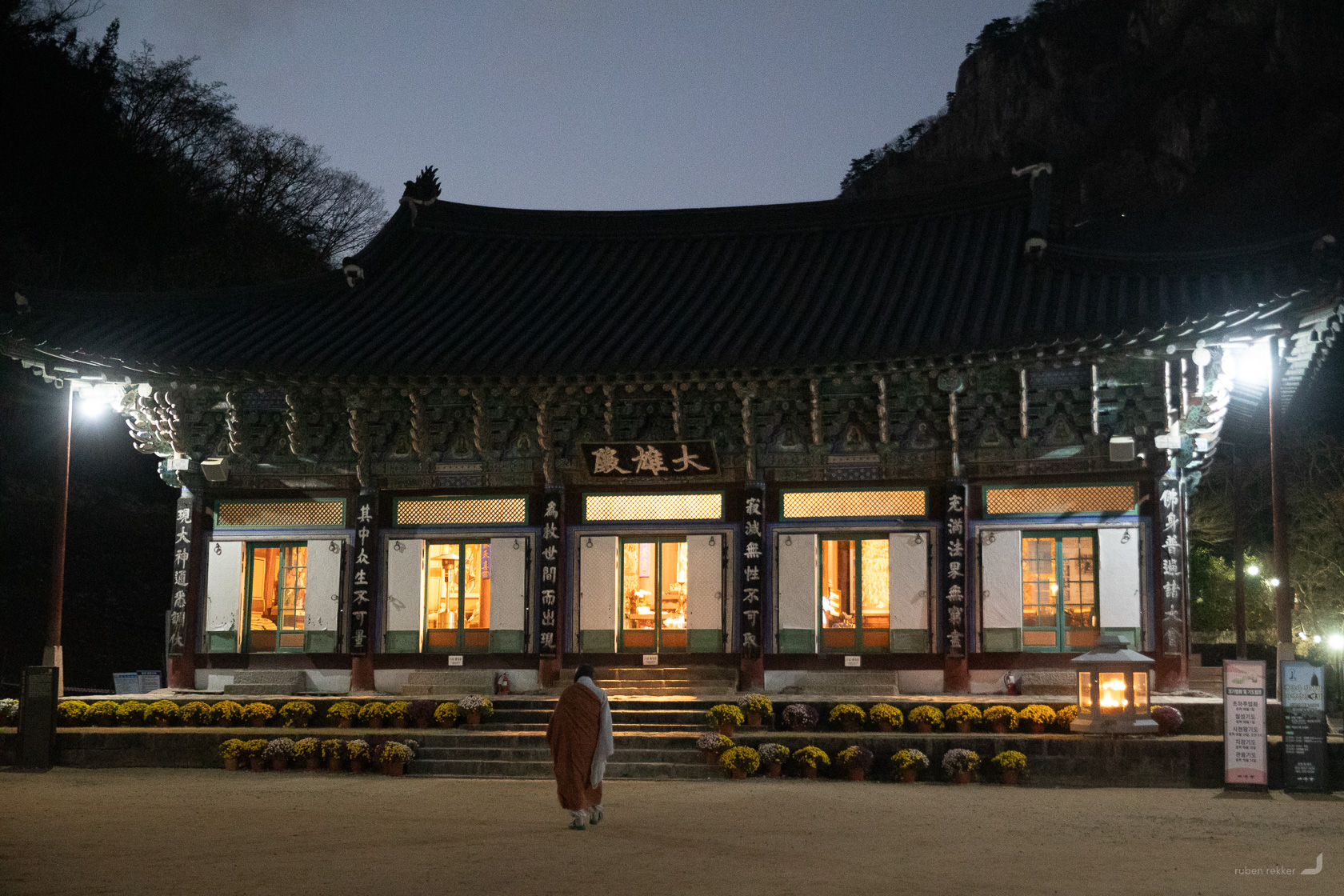
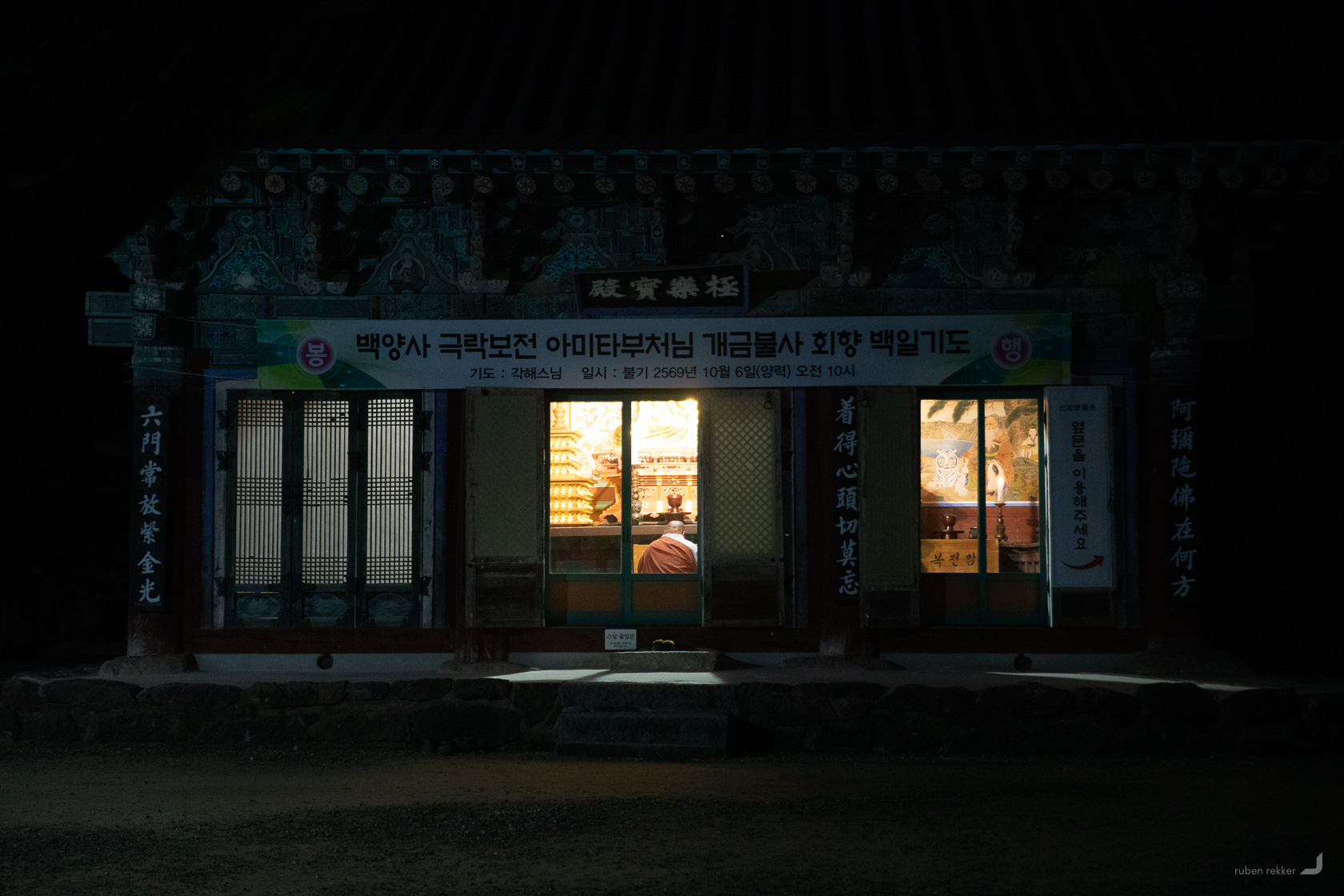
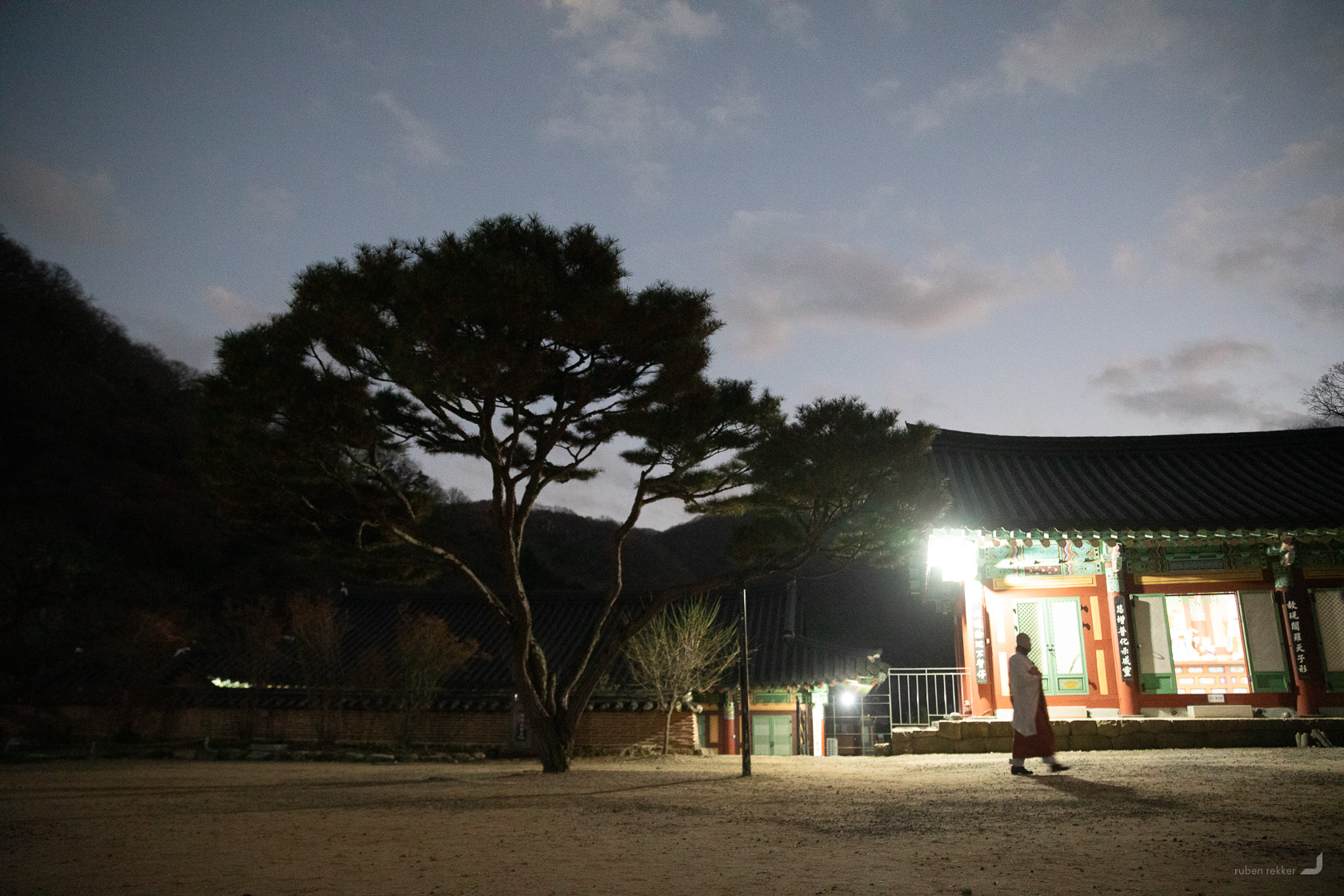
Monastic life at Baekyangsa Temple, nestled amongst the forests and mountains of Naejangsan National Park.
Busan
부산광역시
There were no zombies on the bus to Busan, so taking a bus was the right move. The city itself provided a kind welcome with fireworks popping from tiny boats (maybe for the survivors from those who took the train?) floating in the harbour.
Gamcheon Culture Village is a colourful village that clings to the slopes above the harbour. Even though it is also known as the “Korean Machu Picchu”, it may not actually be as old as the Peruvian Machu Picchu, or as remote, or as monumental, but it may make up for it with its charm.
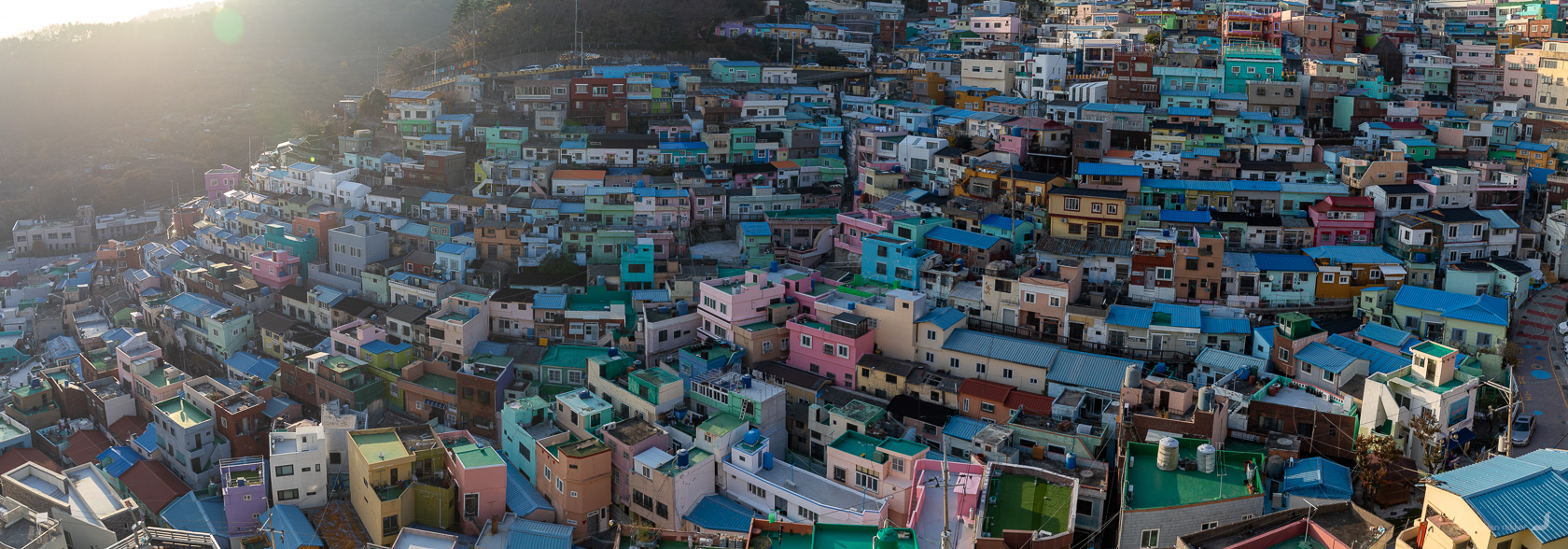
Gamcheon Culture Village along slopes above the harbour in Busan.
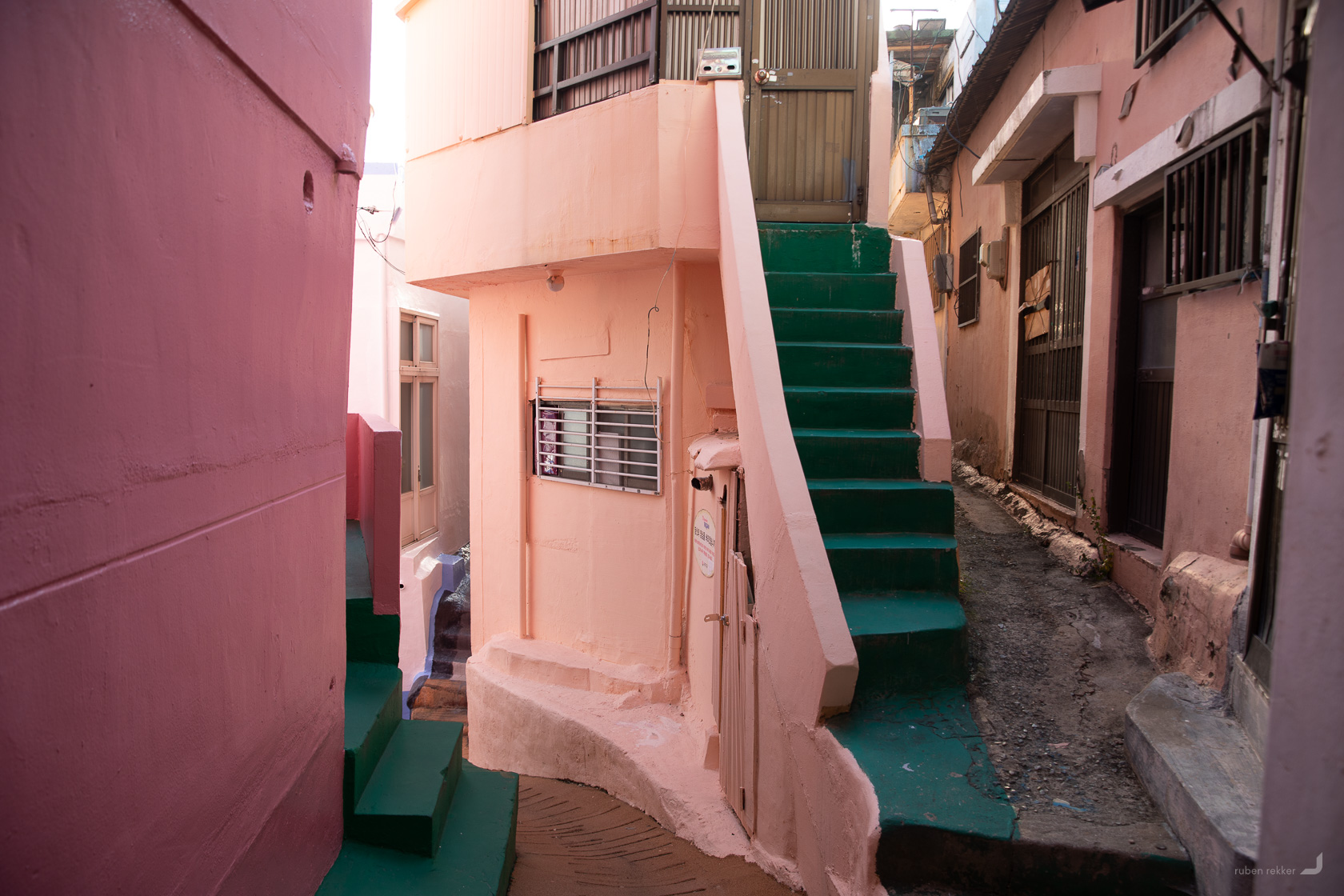
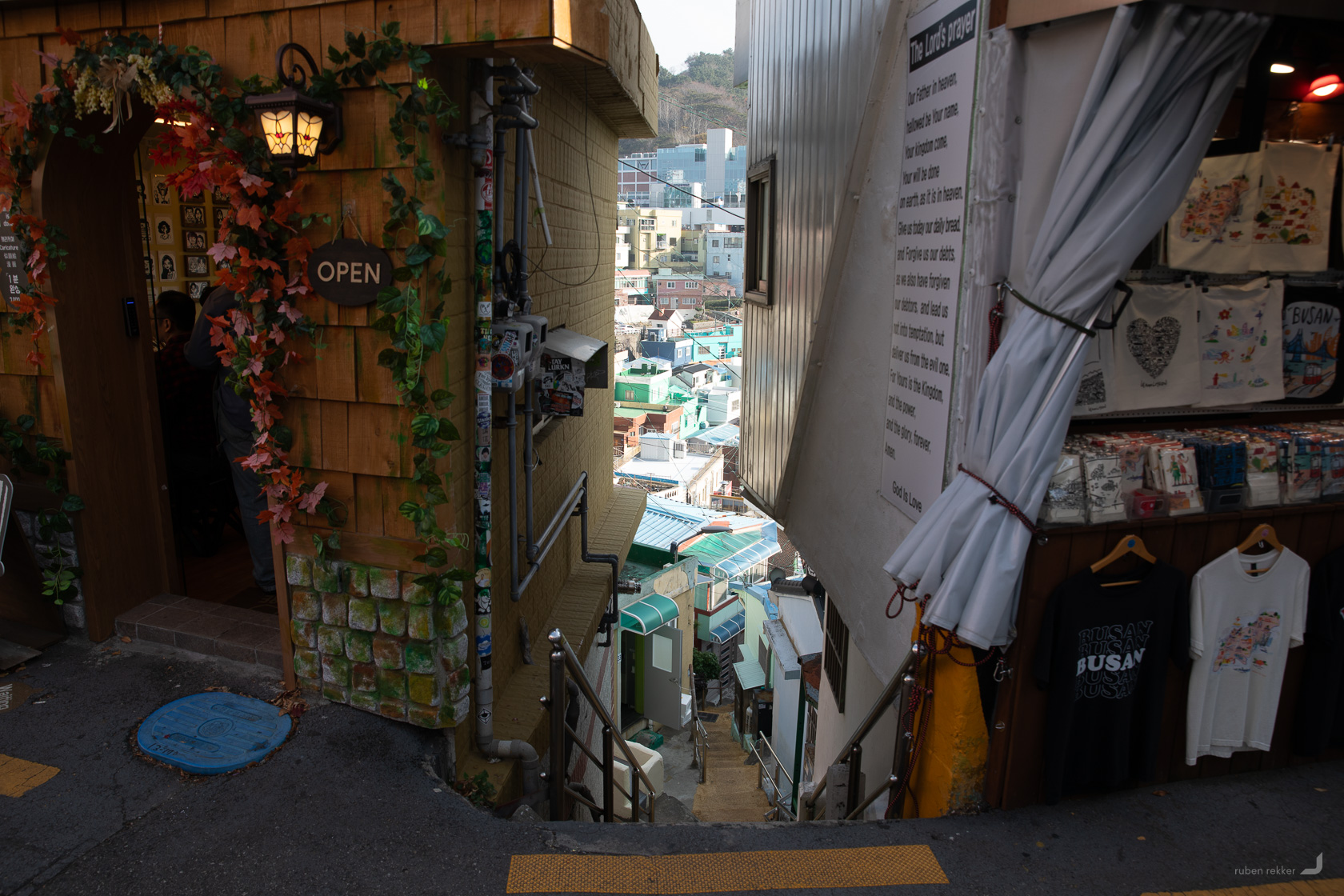
Wandering between the colourful houses feels like stepping from one postcard into the next.
Bamboo Forests
아홉산숲
죽녹원
Just above Busan, you will find the Ahopsan Forest, which has been protected by the same family for roughly 400 years. The bamboo groves here are estimated to be over 100 years old and due to its cinematic vibe, it has been featured in many Korean film productions.
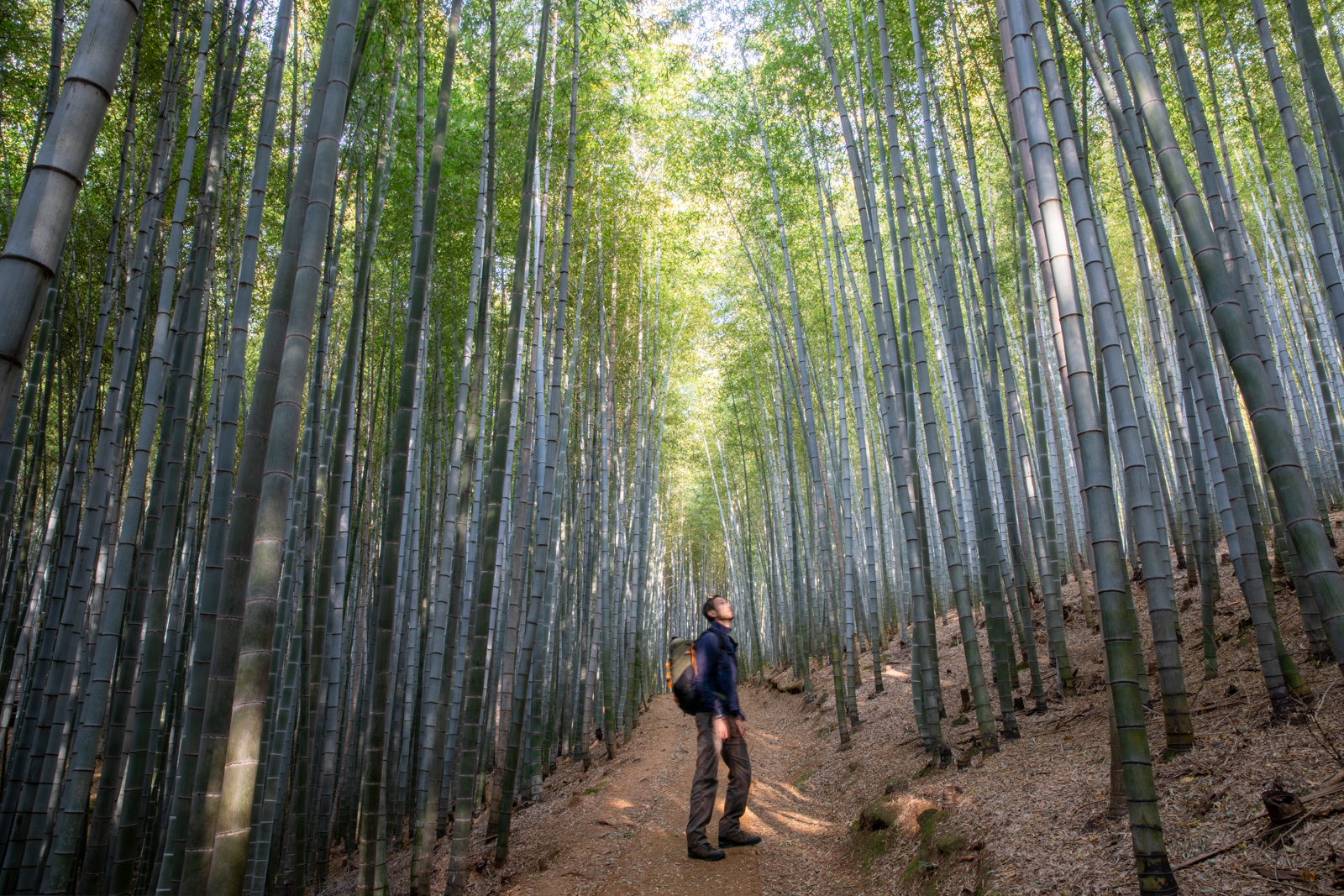
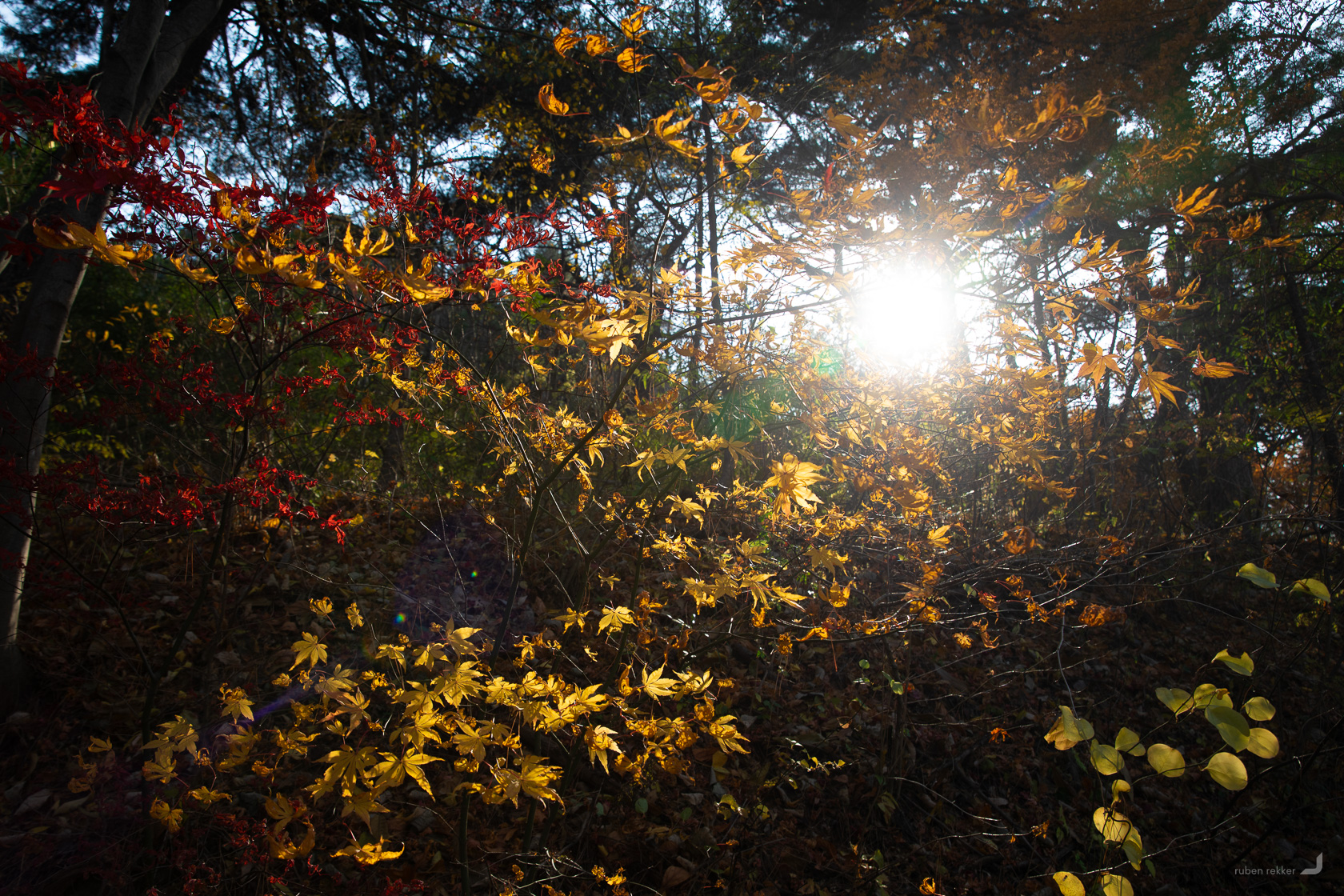
Bamboo, cypress, and cedar stands feel unusually mature and undisturbed (above), while surrounded by autumn leaves (bottom left).
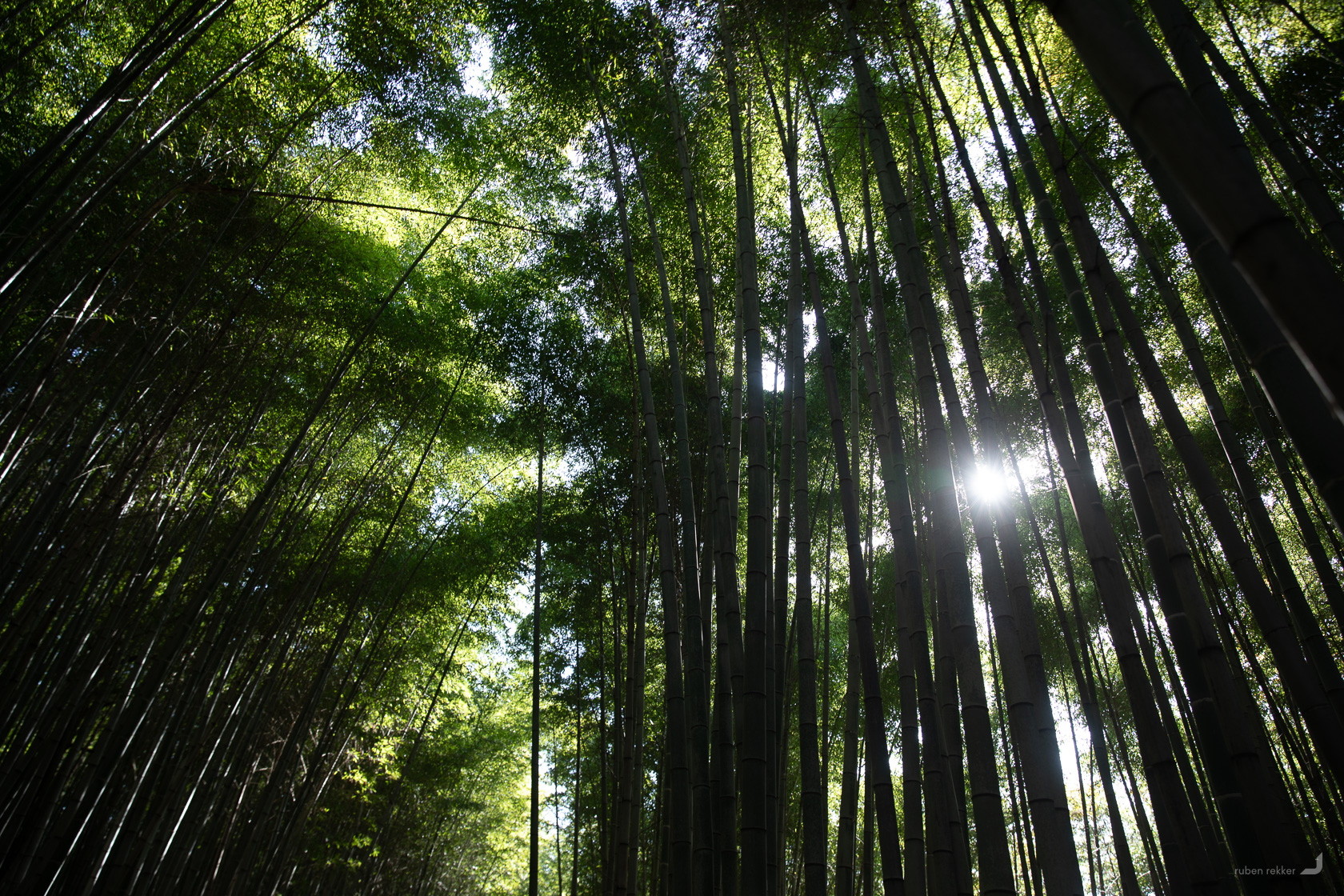
Although not taken in Ahopsan, the Juknokwon Forest has been cultivated in the region for centuries. The park’s bamboo species grow exceptionally straight and tall due to the local soil and climate.
Jeju Island
제주
A simple loop around the Korean peninsula had been the original plan. That changed after meeting a fellow traveler in a hanok who had just returned from Jeju Island and spoke so passionately about visiting at this time of year that a quick search for flights followed. The surprise was the price: just $11 from Busan to Jeju and $15 from Jeju to Seoul, baggage included. The decision suddenly became very easy.
Jeju Island was formed by volcanic eruptions and is home to Hallasan, South Korea’s highest mountain, with a crater lake at its summit. The island’s dramatic tuff cones and vast lava tubes are UNESCO-listed, and its porous basalt stone shapes everything from fences to houses. Jeju is also famous for the haenyeo: legendary women free-divers who harvest seafood without tanks, and for quirky local touches like wind-bent trees, black-pork barbecue, and more statues of stone grandfathers than you can count.
Seongsan Ilchulbong
성산 일출봉
On the eastern side lays Seongsan Ilchulbong, nicknamed “Sunrise Peak”. It is a rare tuff cone formed by a volcanic eruption under the sea about 5,000 years ago. Its wide, grass-lined crater looks like a natural amphitheater, and the climb to the rim takes around 20–30 minutes via a steep stair trail.
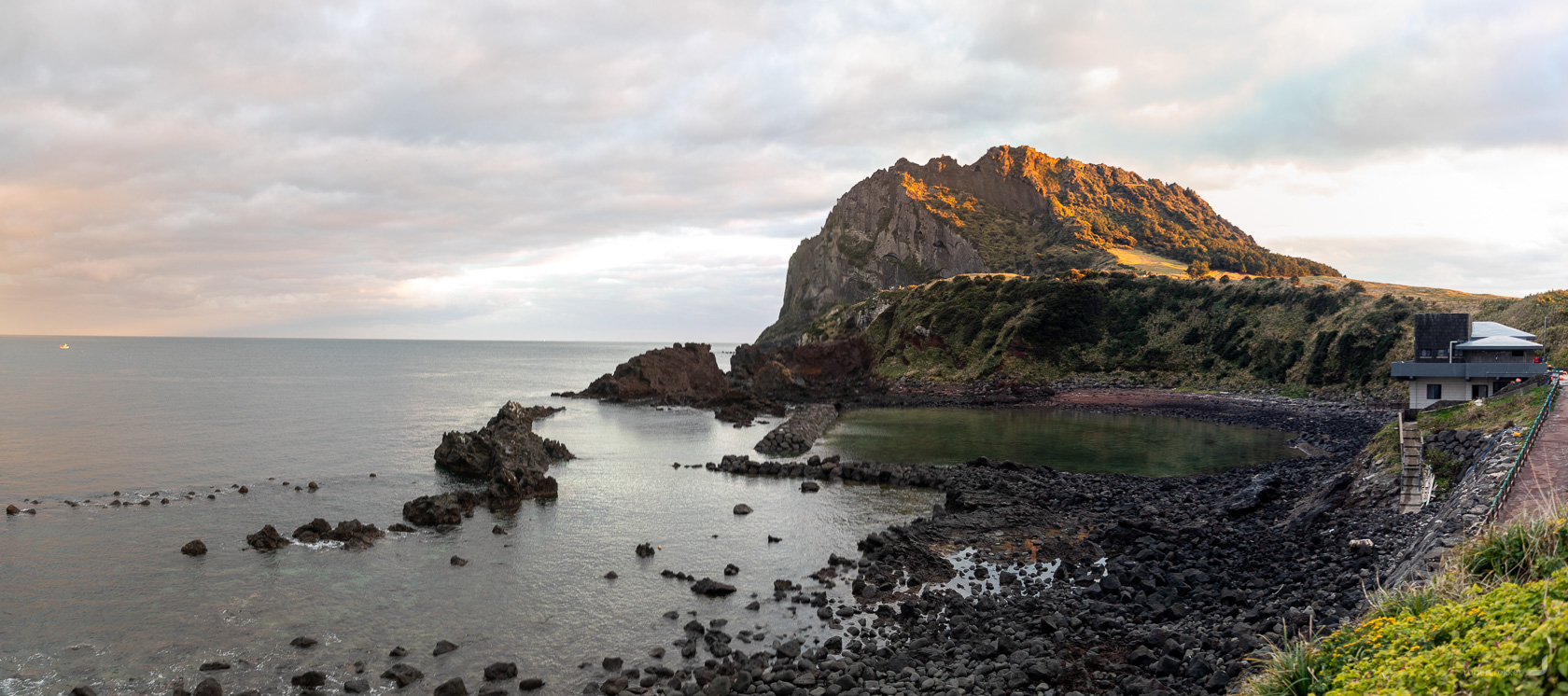
Seongsan Ilchulbong on Jeju Island, a volcanic tuff cone tuff cone that formed about 5,000 years ago.
Seogwipo Jeongbang Waterfall
정방폭포
Down at the south end, Jeongbang Waterfall is one of the very few waterfalls in Asia that plunges directly into the ocean, spilling over dark basalt cliffs into the sea below. About 23 meters high, it’s tied to a local legend that the Chinese envoy Seobul carved his name into the rock face here while searching for an elixir of life.
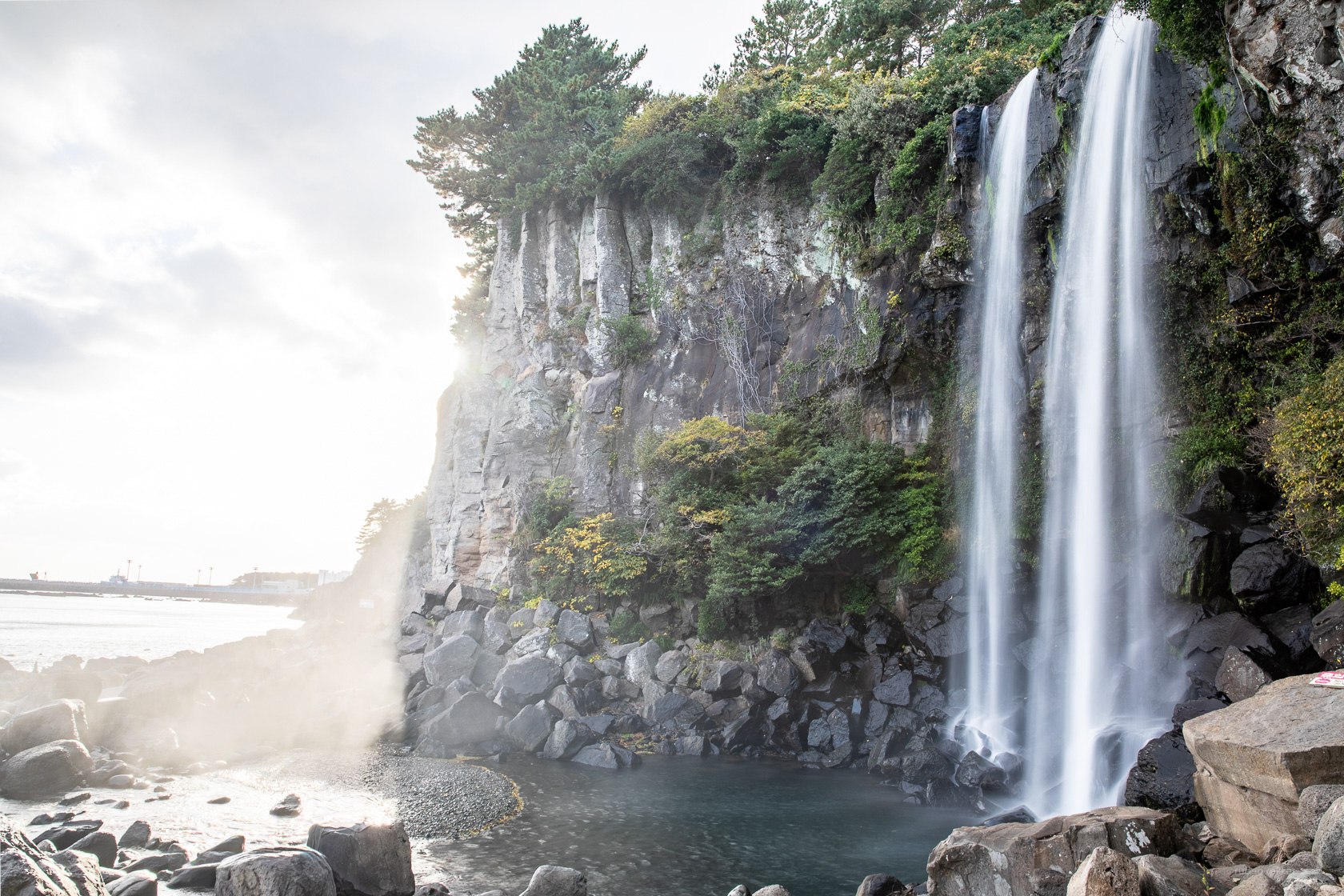
Jeongbang Waterfall on Jeju Island, one of the few waterfalls that drops directly into the ocean.
Hallasan
한라산
Hallasan rises 1,947 meters above Jeju Island as the country’s highest peak and a classic shield volcano, crowned by the crater lake Baengnokdam. The trail threads through distinct climate zones, from subtropical forest to alpine flora, compressing multiple ecosystems into a single day’s walk.
While ascending the mountain, the trail became increasingly foggy and covered in snow. It later became clear that this was the first “clear” day after a major snow storm had passed through. After nearly four hours of climbing, the path reached the edge of the clouds and sunlight started to break through. As the volcano is not that high, there is dense vegetation still clinging to the slopes at this altitude. With trees, plants, and rocks fully coated in snow, and the sudden return of sunlight after days without it, the landscape transformed into a bright, sparkling winter wonderland that will be edged in my memory for a long time to come.
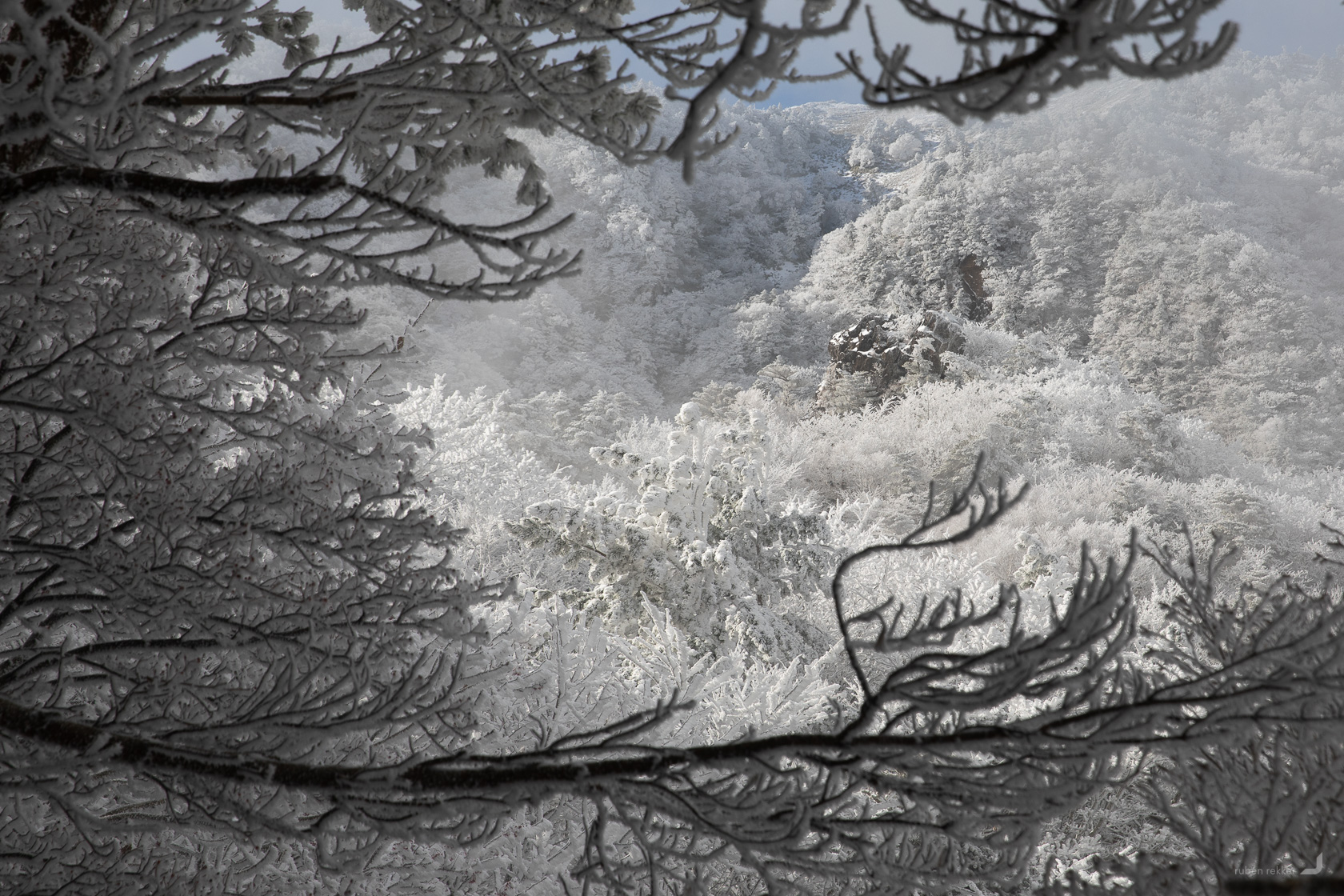
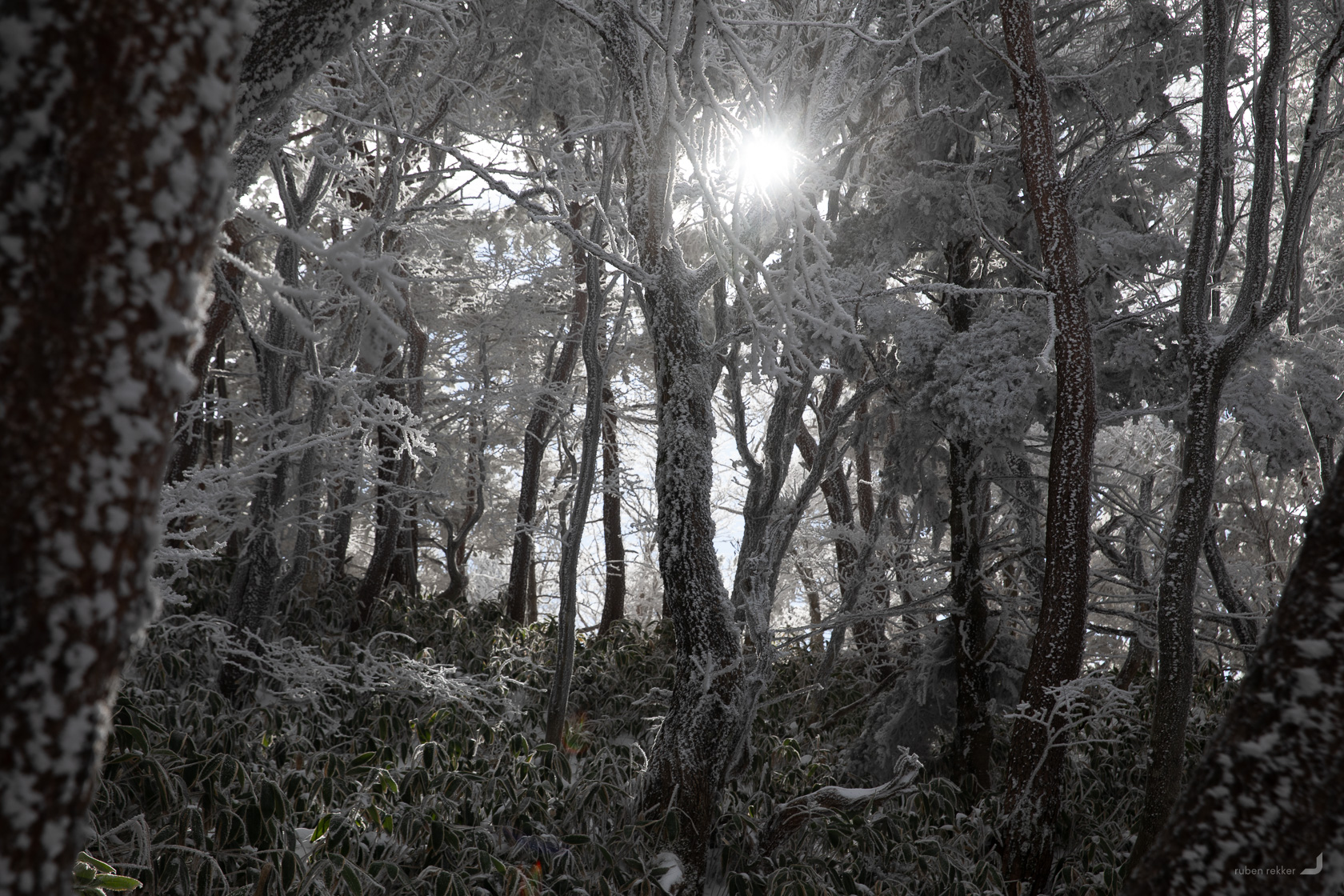
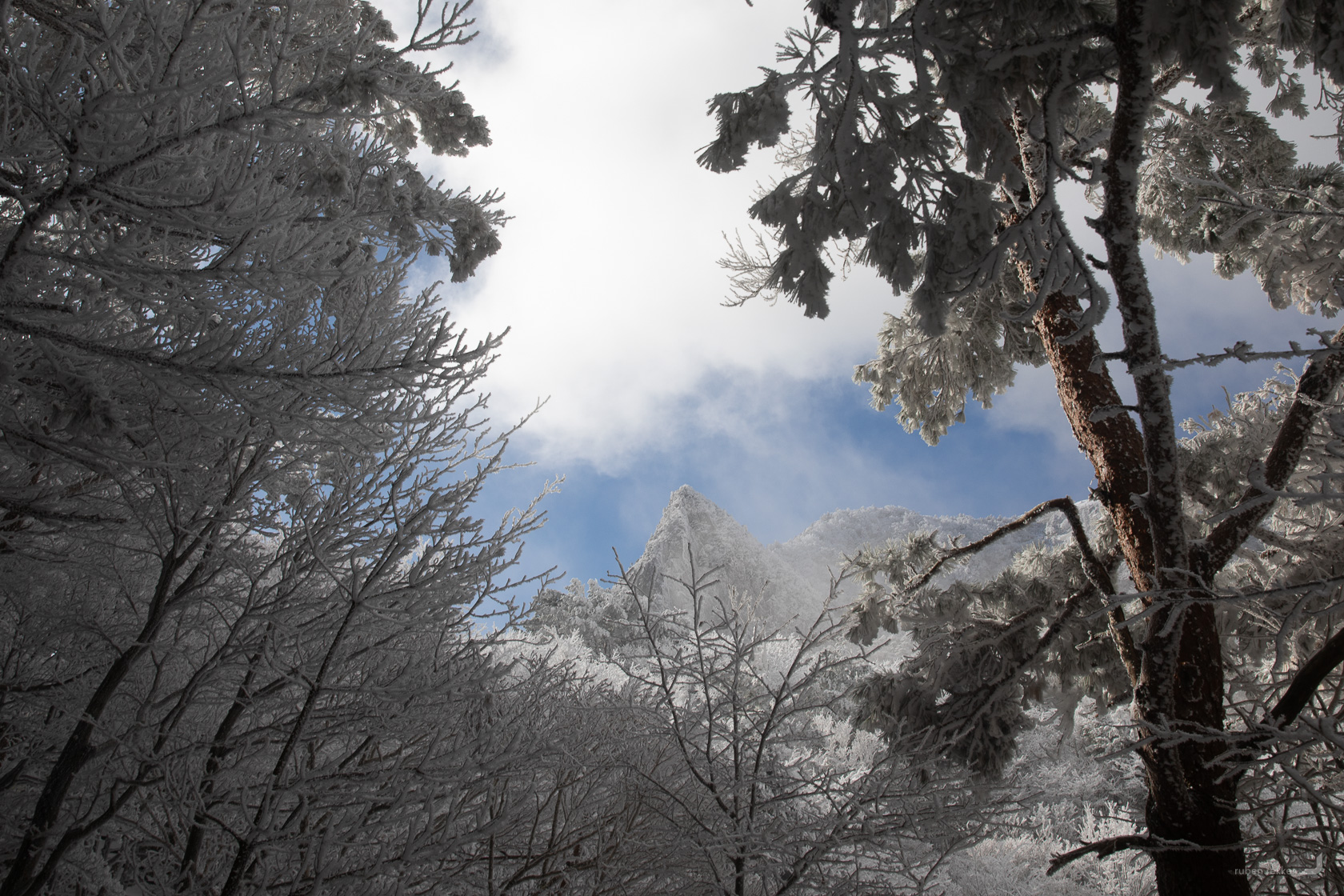
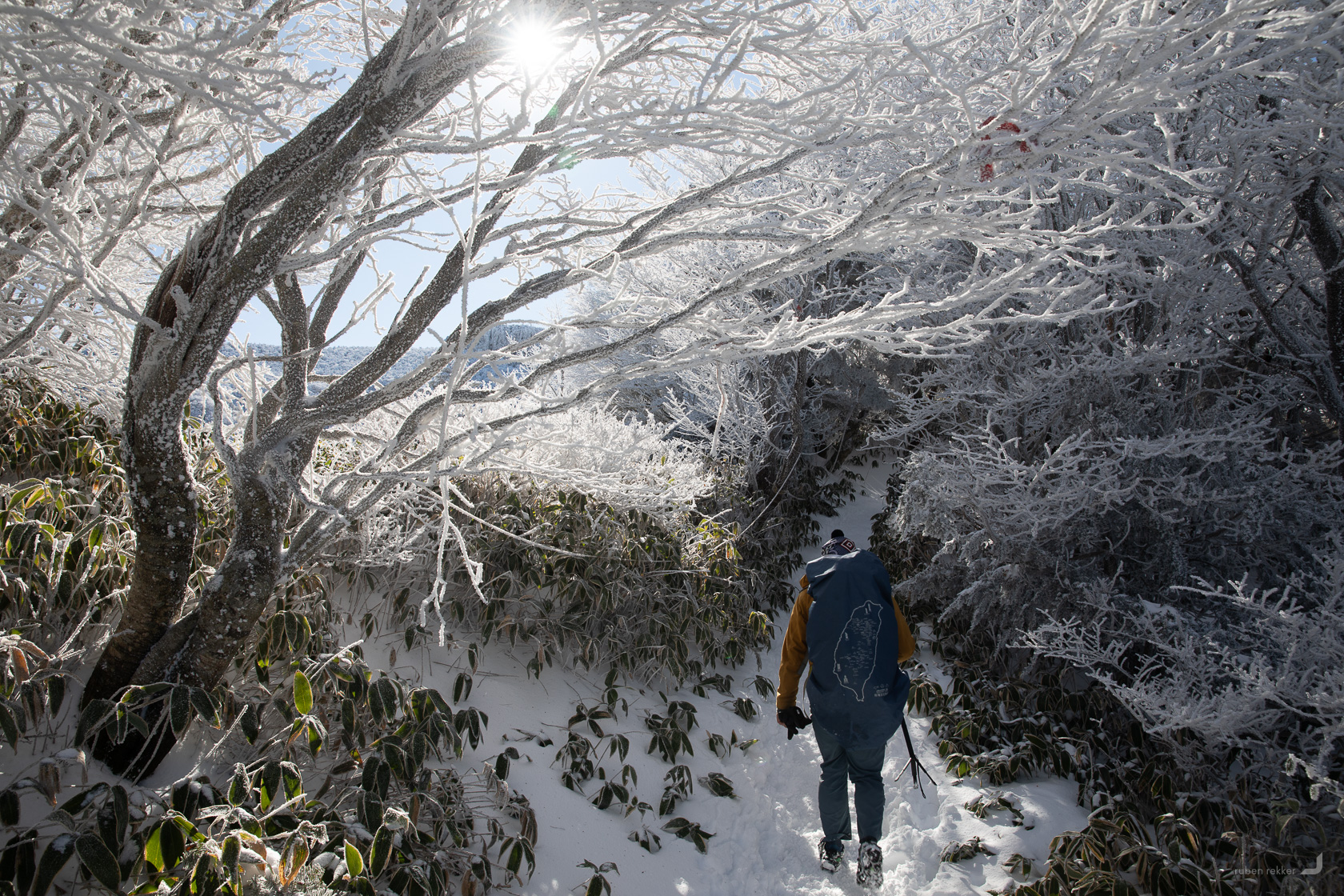
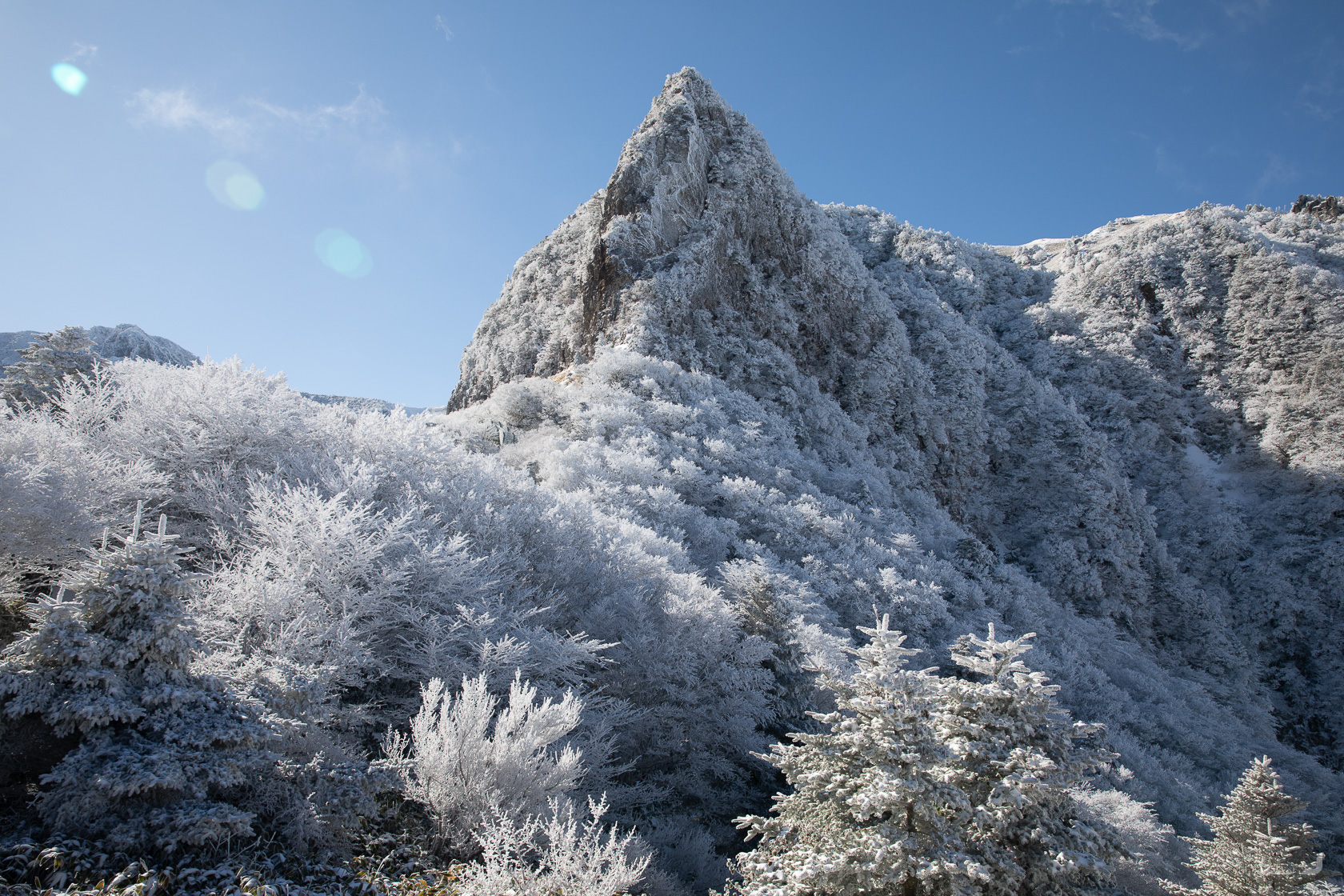
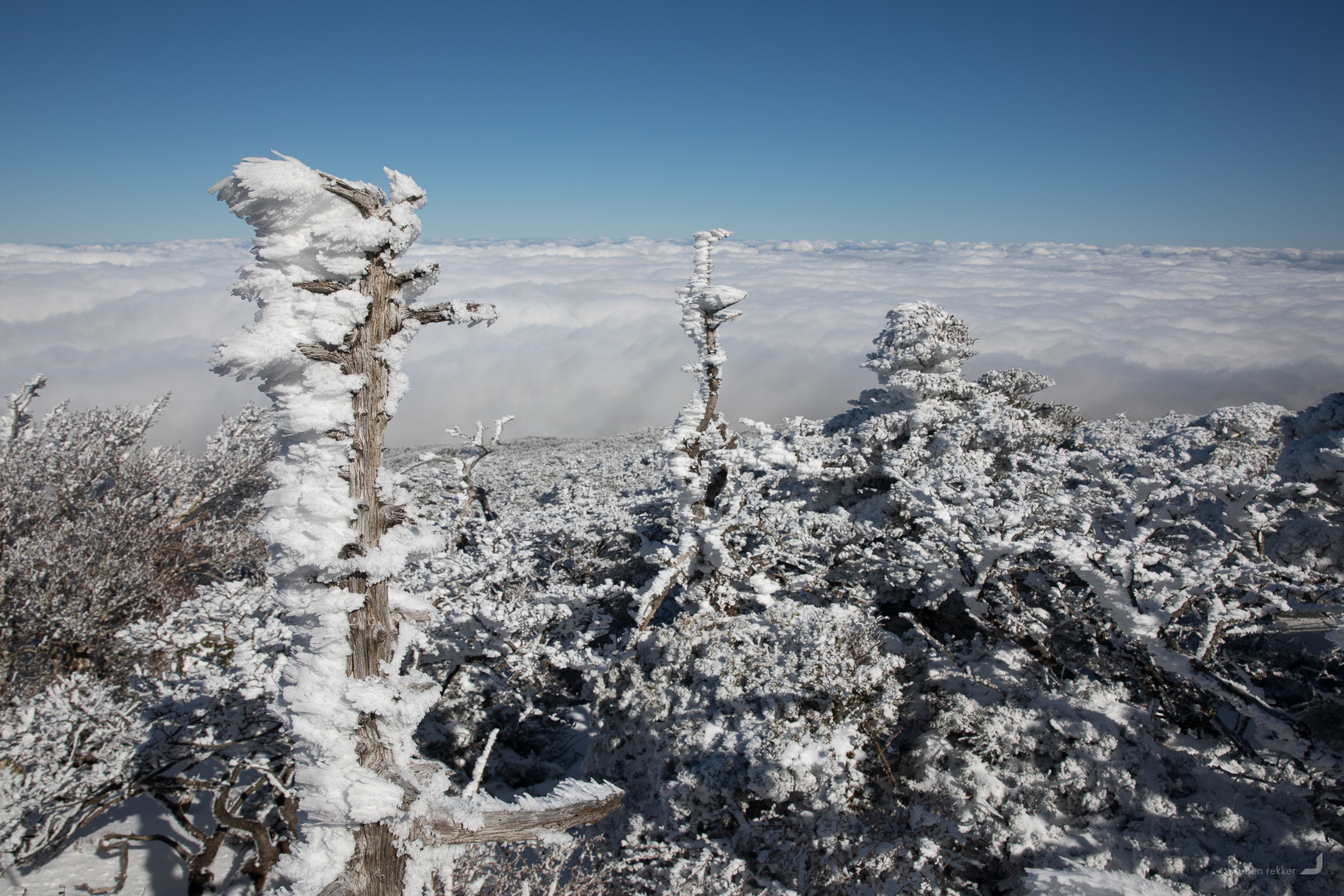
Ascending Hallasan (1,947m) on Jeju island. While hiking up the trail, the landscape transformed from gloomy and foggy into a bright winter wonderland due to a snow storm that had just swept through the area.
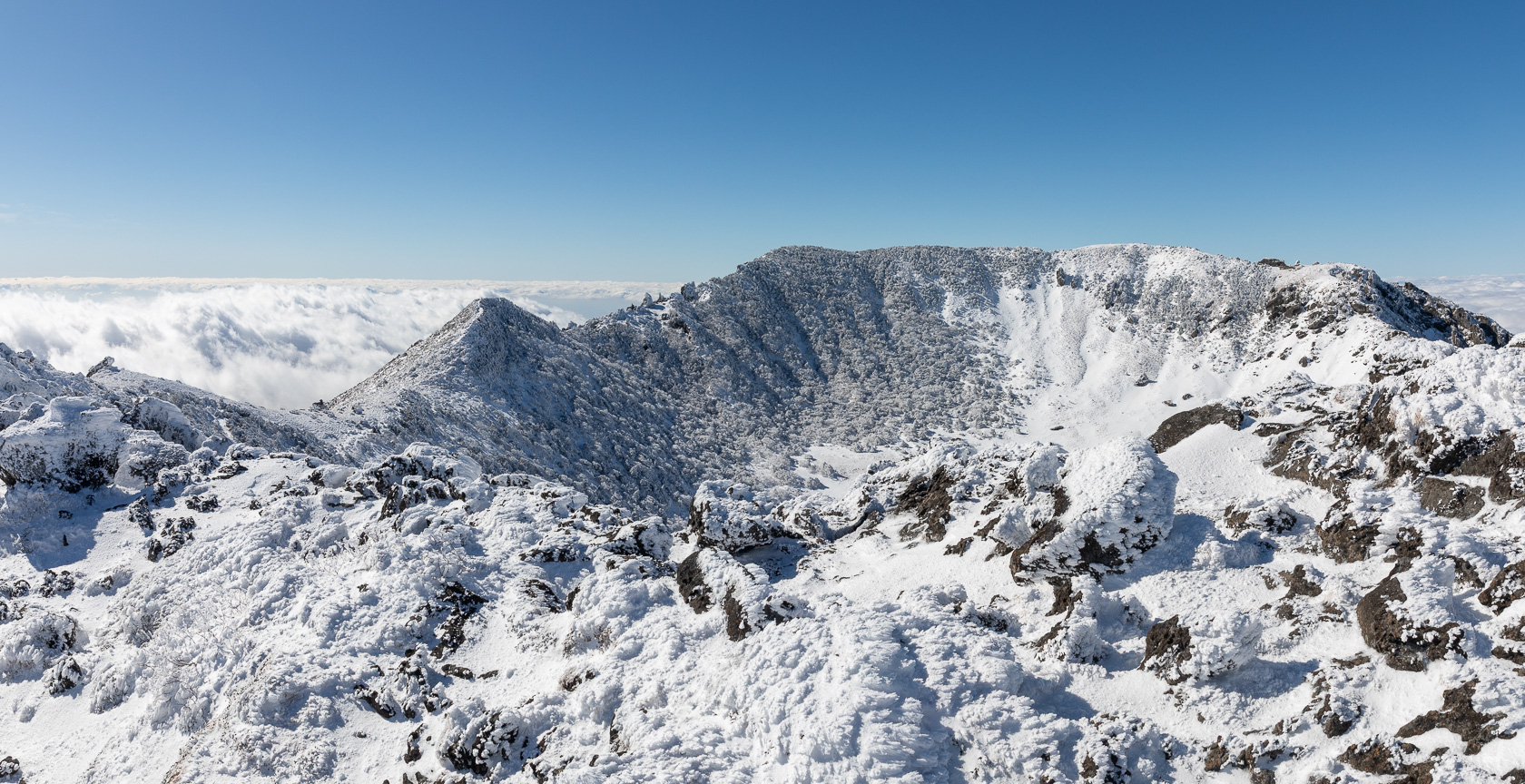
Crater rim at Hallasan, looking into Baengnokdam, a quiet lake held inside the summit of South Korea’s highest volcano that becomes frozen in winter.
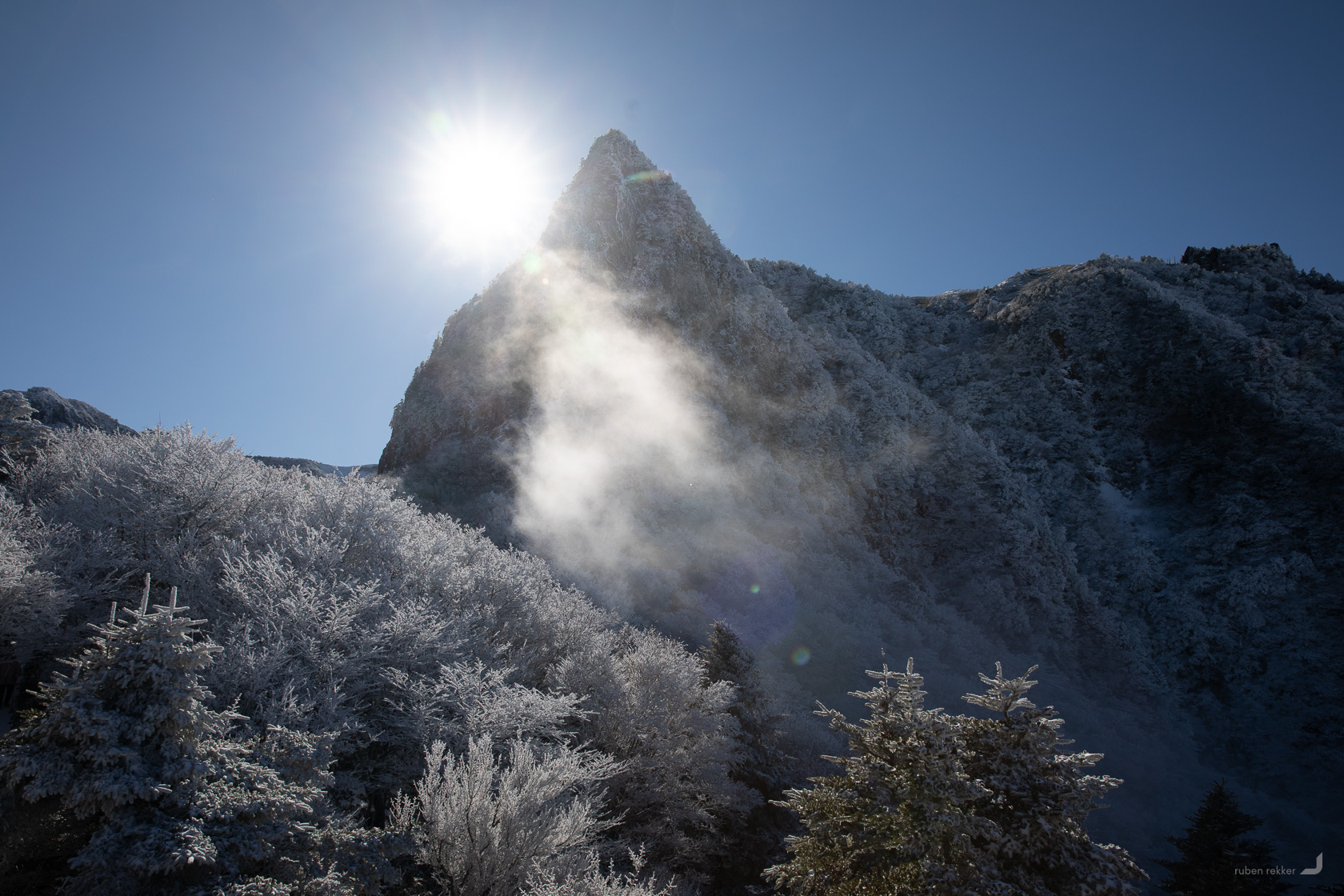
Samgagbong covered in snow on the Gwaneumsa trail while hiking up Hallasan, on Jeju island.
Two weeks is far too short to do justice to a country this diverse. Still, the time revealed a remarkable blend of ancient and modern, the artificial world with the natural world, and of a place that is carefully tended by its people. There is a quiet national pride here, felt not in slogans but in everyday care, and in the warmth of those encountered along the way. I truly cannot wait to visit once again.